
The land underneath everything
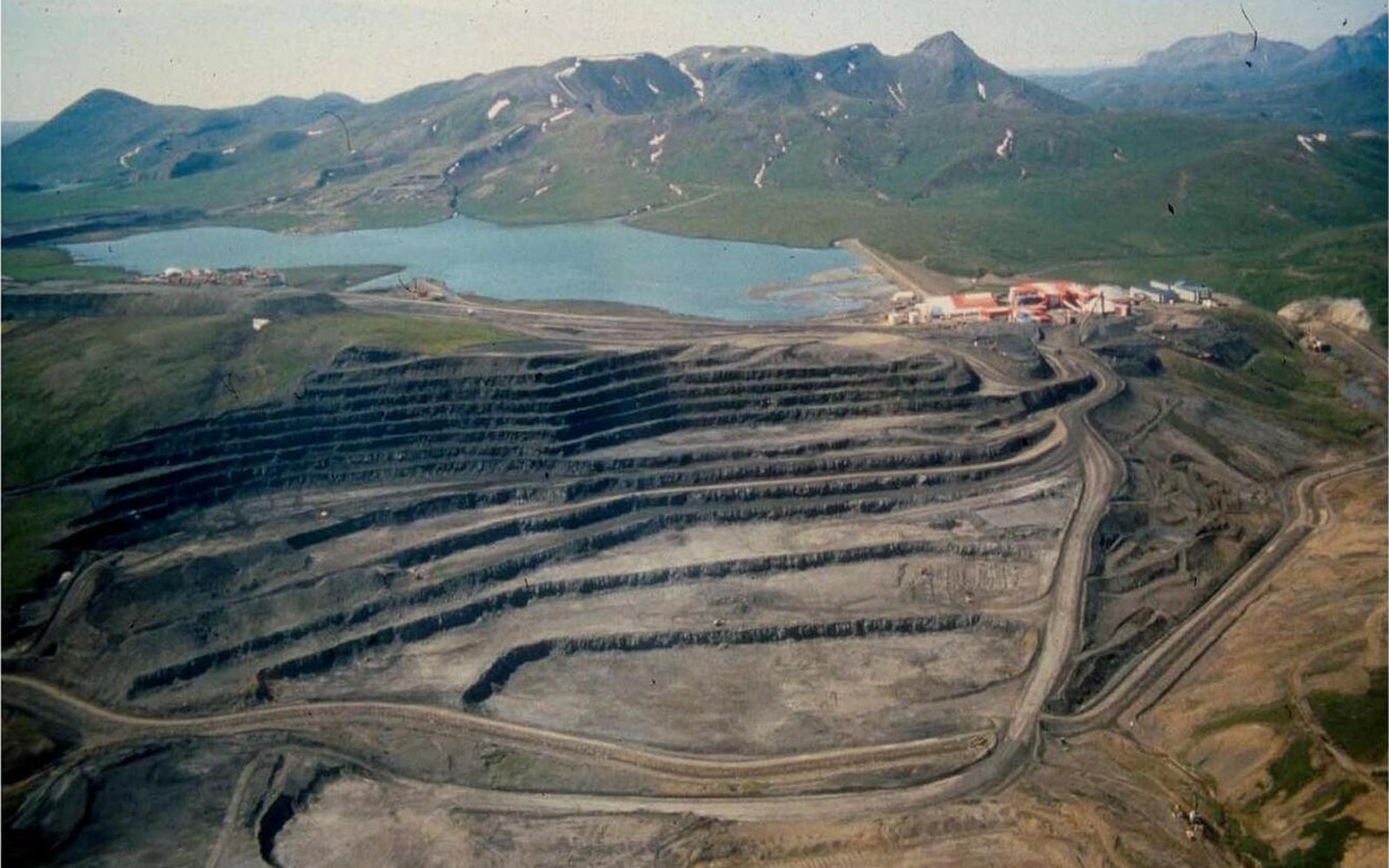
Red Dog Mine sits on land that belongs to NANA Regional Corporation. That fact is not incidental — it is the legal and financial spine of the whole operation. Without the Alaska Native Claims Settlement Act of 1971, NANA would not exist as a landowning entity, and without NANA's ownership of the mineral estate, the mine would have had no path to a permit. The operating agreement between NANA and the mine's operator, Teck Alaska Incorporated, is the instrument that converted a zinc deposit under Iñupiat land into a producing mine, and it is the reason royalties flow back to the region rather than out of it entirely.
ANCSA extinguished aboriginal land title across Alaska and, in exchange, conveyed roughly 44 million acres and nearly a billion dollars to Alaska Native corporations, regional and village alike. NANA, one of thirteen regional corporations created by the act, received surface and subsurface title to lands in the Kotzebue Sound region, including the area in the western Brooks Range where geologists had already identified one of the world's largest zinc-lead deposits. The timing mattered: the deposit was known before the settlement was final, which meant the question of who owned the mineral rights was being negotiated at the same moment the resource's value was becoming clear.
The agreement and what it does
Teck (then operating as Cominco, the name under which the project was developed) and NANA signed their first operating agreement in 1982, before the mine opened. Red Dog began production in 1989, making it one of the later large hard-rock mines to open in Alaska during the twentieth century. The operating agreement gave Teck the right to develop and operate the mine in exchange for a royalty paid to NANA, with the royalty percentage escalating over time as capital costs were recovered. In the early years of production, while Teck was recouping its development investment, NANA's royalty share was small. Once the capital threshold was crossed — which happened, by most public accounts, in the mid-2000s — NANA's share rose substantially, ultimately reaching a level that makes NANA one of the more unusual landowners in the American mining industry: a Native regional corporation collecting a majority share of net proceeds from a mine on its own land.
The agreement was renegotiated and extended in 2007. Under the terms described in NANA's public reporting, once Teck's costs were fully recovered, NANA's share of net proceeds was set to reach 50 percent and then step upward incrementally — toward levels that, at full escalation, return most of the economic surplus to the landowner. This structure was deliberate. The original framework gave the operator the return needed to justify a capital-intensive project in a remote Arctic location, while building in a long-term transfer of value to the landowner as that capital was paid back. Whether the structure was advantageous enough to NANA, and when, has been a recurring question in public discussion of the mine, but the fundamental architecture — royalty escalation tied to capital recovery — has remained in place.
NANA also retains the right to take a working interest in the mine, converting from royalty recipient to equity participant at specific points. That option has significant implications: a working-interest holder shares in profits and losses rather than receiving a fixed percentage of proceeds, which raises both the ceiling and the floor of financial exposure. The decision of when and whether to exercise that option is a corporate governance matter for NANA's board, not a public regulatory proceeding, so the detail of those deliberations is not in the public record.
Employment and the preference clause
The operating agreement also contains an employment preference for NANA shareholders. Teck is required to give hiring preference to NANA shareholders and their descendants, and to make good-faith efforts to train and advance them into skilled and supervisory positions. This clause has made Red Dog one of the larger private employers of Iñupiat workers in northwest Alaska, and the mine's workforce has for many years included a substantial shareholder component — figures cited in various public contexts have run above 50 percent of the total workforce, though the precise current figure changes with each hire and each year.
This preference is not simply a gesture: it represents a negotiated term with real operational weight, because the remote location means housing workers at the mine site year-round regardless of origin, and the preference clause shapes which candidates the operator is obligated to prioritize. It does not guarantee employment to every NANA shareholder, and it does not insulate the workforce from layoffs when zinc prices fall, as they did sharply in periods including 2008–2009 and again in 2015–2016. When the market drops, the mine curtails production and the employment numbers move accordingly, a volatility that regional planners have had to account for.
The mine is projected to continue operating into the 2030s, contingent on ore reserves and market conditions.
Royalties and their distribution
The royalties NANA receives do not stay entirely within the NANA corporation. Under ANCSA's Section 7(i), regional corporations are required to share 70 percent of revenues from the timber and subsurface resources they receive under the act with the other twelve regional corporations, which then redistribute a portion of that to village corporations. This means that a fraction of every dollar in Red Dog royalties travels across Alaska to Native corporations far outside the Kotzebue region. The mechanism was designed to prevent the accident of geography — which corporation happened to sit atop a mineral deposit — from producing extreme inequalities among the thirteen regions. In practice it has made NANA one of the larger net contributors to the 7(i) pool in years when zinc prices are high and Red Dog is producing well.
The remaining 30 percent of NANA's resource revenues, retained after the 7(i) share-out, flows into NANA's operating budget and dividends to shareholders. NANA shareholders are the approximately 14,000 Iñupiat people enrolled in the corporation; dividends and other benefits from the mine therefore reach individual shareholders, not just the corporate entity. The amount per shareholder varies with production, prices and corporate decisions about retention versus distribution, and NANA does not publish a per-shareholder breakdown in its routine public communications.
The stretch this piece is about: Kivalina at the mouth, Red Dog at the head, the De Long Mountains behind both.
Geometry: project map kit
What the structure produces
The arrangement at Red Dog is, in structural terms, what ANCSA was designed to make possible: a resource project on Native land that generates returns to Native landowners rather than simply extracting value past them. Whether it has done so adequately, and on whose terms, is a question that practitioners of resource economics, Native rights law and regional development policy have debated in print for decades. What the public record of the mine's royalty structure shows is a documented escalation from negligible early royalties to substantial later ones, a workforce preference that has placed Iñupiat workers throughout the operation, and a 7(i) distribution mechanism that spreads some portion of those returns across Alaska's other Native regions.
The mine is projected to continue operating into the 2030s, contingent on ore reserves and market conditions. When it closes, the land will revert to NANA's management. The reclamation bond, the closure plan and the post-closure monitoring obligations are all regulatory instruments that exist independently of the operating agreement, under Alaska Department of Environmental Conservation and EPA authority. The land was there before the mine; under the terms of the settlement act and the agreement, it will belong to NANA after.