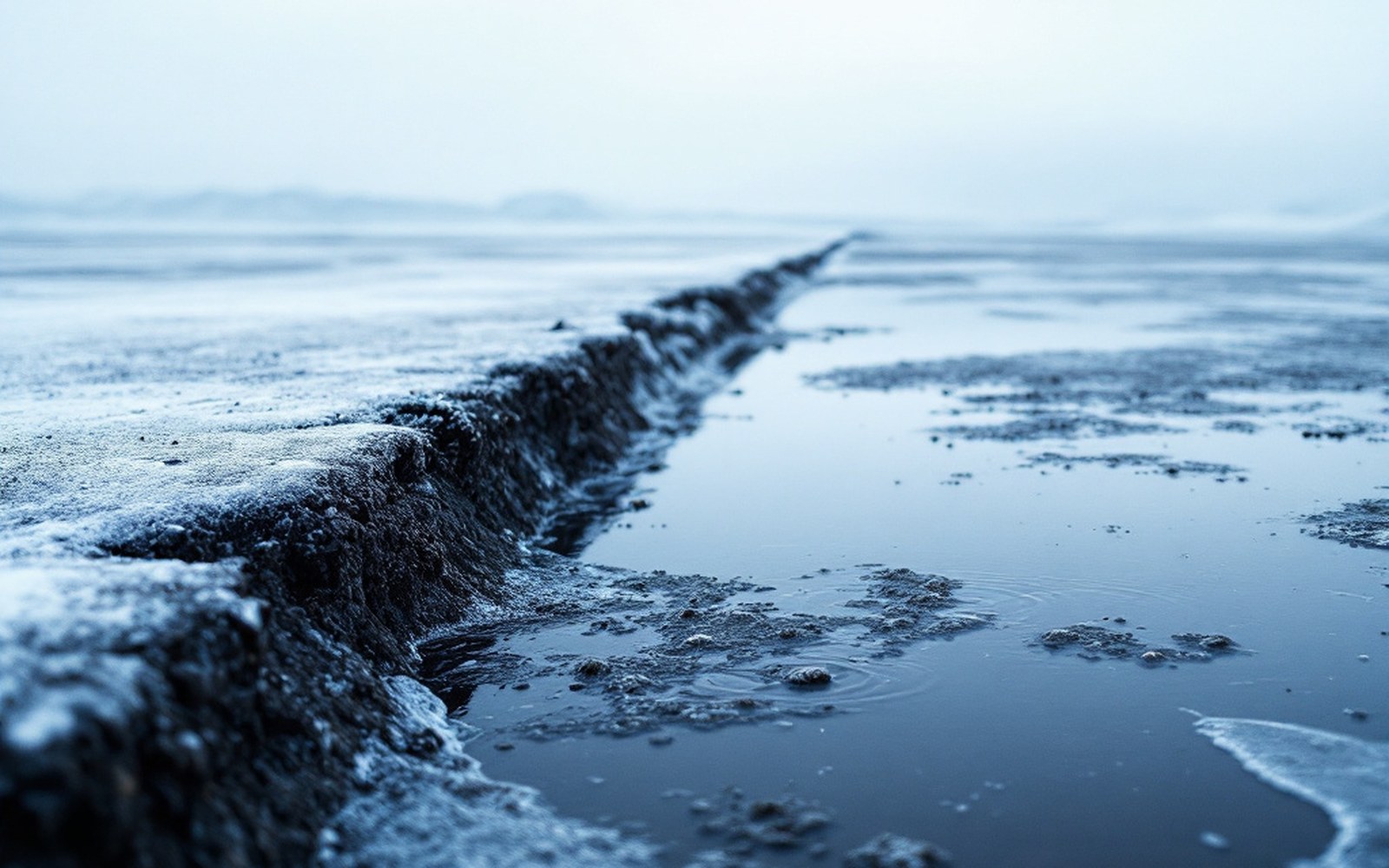
What gets left behind
Mining zinc and lead at Red Dog produces two things in parallel: concentrate that ships south, and tailings that stay. Tailings are the finely ground rock left after the valuable minerals have been separated out, and at Red Dog they carry residual zinc, lead and cadmium at concentrations high enough to require permanent containment. The Wulik River is immediately downstream. That proximity is not incidental — it is the engineering constraint that organises everything else.
The tailings are impounded in a lined facility on the upland tundra at the head of the Wulik's watershed. The design has to account for freeze-thaw cycling, permafrost, seismicity and the fact that the impoundment will still be there long after the mine closes. Permafrost underlies the region, but it is not uniform; the active layer — the zone that thaws seasonally — affects how structures move and how liners perform. Building on frozen ground at industrial scale means designing for ground that behaves differently in June than it does in January, and for a warming climate that is shifting that difference year by year.
The water problem has two seasons
Process water — the liquid used to separate ore from waste rock — picks up metals along the way. At Red Dog, that water has to be collected, treated and discharged within limits set by the facility's permits. The Alaska Department of Environmental Conservation sets the discharge standards, and compliance is monitored continuously. What makes this harder than in a temperate climate is the seasonality: for several months of the year, the watershed is frozen and surface water barely moves. Then break-up arrives, snowmelt concentrates, and runoff across the whole facility spikes within a short window.
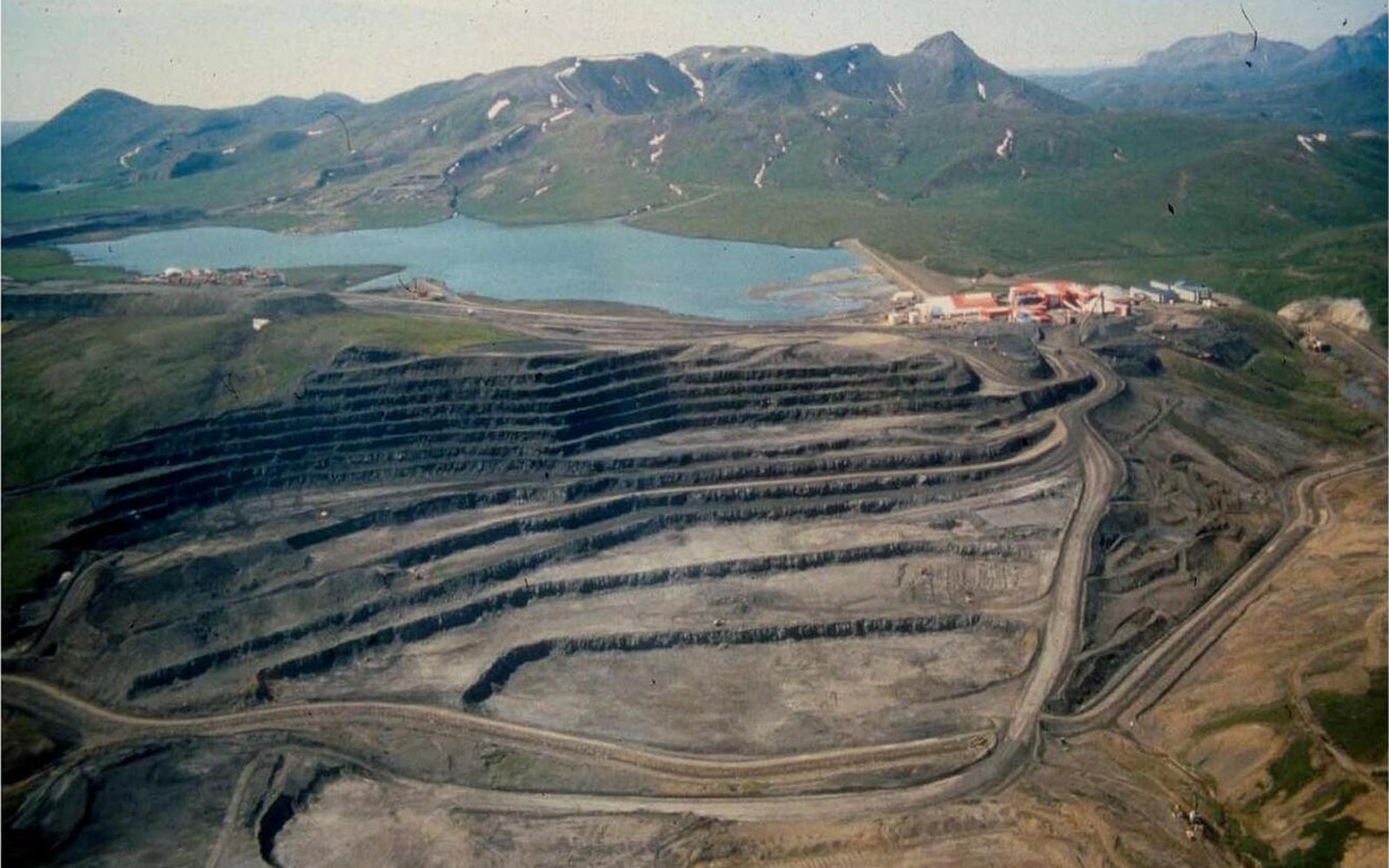
Managing that spike means holding water in storage through the frozen months and treating it as discharge capacity opens in late spring and summer. The storage volumes required are large, and the structures that hold them — dams, berms, lined ponds — have to perform under repeated freeze-thaw loading without developing leaks. The monitoring dataset for the Wulik is one of the longer continuous records for any river in the region, and it exists precisely because the question of whether containment is working requires sustained measurement, not spot-checks.
The Alaska Earthquake Center records seismic activity across the state, and northwest Alaska sits within a seismically active region — not the highest-risk zone in the state, but not a quiet one either. Tailings dams are among the structures most vulnerable to seismic loading, and the design standards for Red Dog's impoundments have to address failure modes that include earthquake excitation of saturated fine material.
After the mine closes
The permitting framework in Alaska requires mine operators to post financial assurance — a bond or equivalent instrument — sufficient to cover reclamation and long-term water treatment if the operator defaults. For a facility like Red Dog, where post-closure water management may be required for decades, calculating that figure involves projecting treatment costs under substantial uncertainty about how the impoundment will behave as permafrost conditions shift.
NANA Regional Corporation holds the land and is a party to the operating agreement with Teck Alaska, which means the question of what the site looks like after closure is not only a regulatory one — it is a land-tenure one. The terms of that arrangement govern which party is responsible for what, and for how long. What the permit record and the operating agreement together require is a system that keeps contaminated water from reaching the Wulik indefinitely, and the engineering challenge is that "indefinitely" outlasts every assumption the original designers could confidently make.
The concentrate leaves on ships. The tailings don't go anywhere. Every structural element of the containment system — the liner, the berms, the treatment plant, the monitoring wells — has to remain functional through a post-closure period that may be measured in centuries, maintained by whoever holds the land when no revenue is coming in to pay for it. That is the part of the problem that is not yet resolved, here or at most hard-rock mines operating in permafrost terrain.