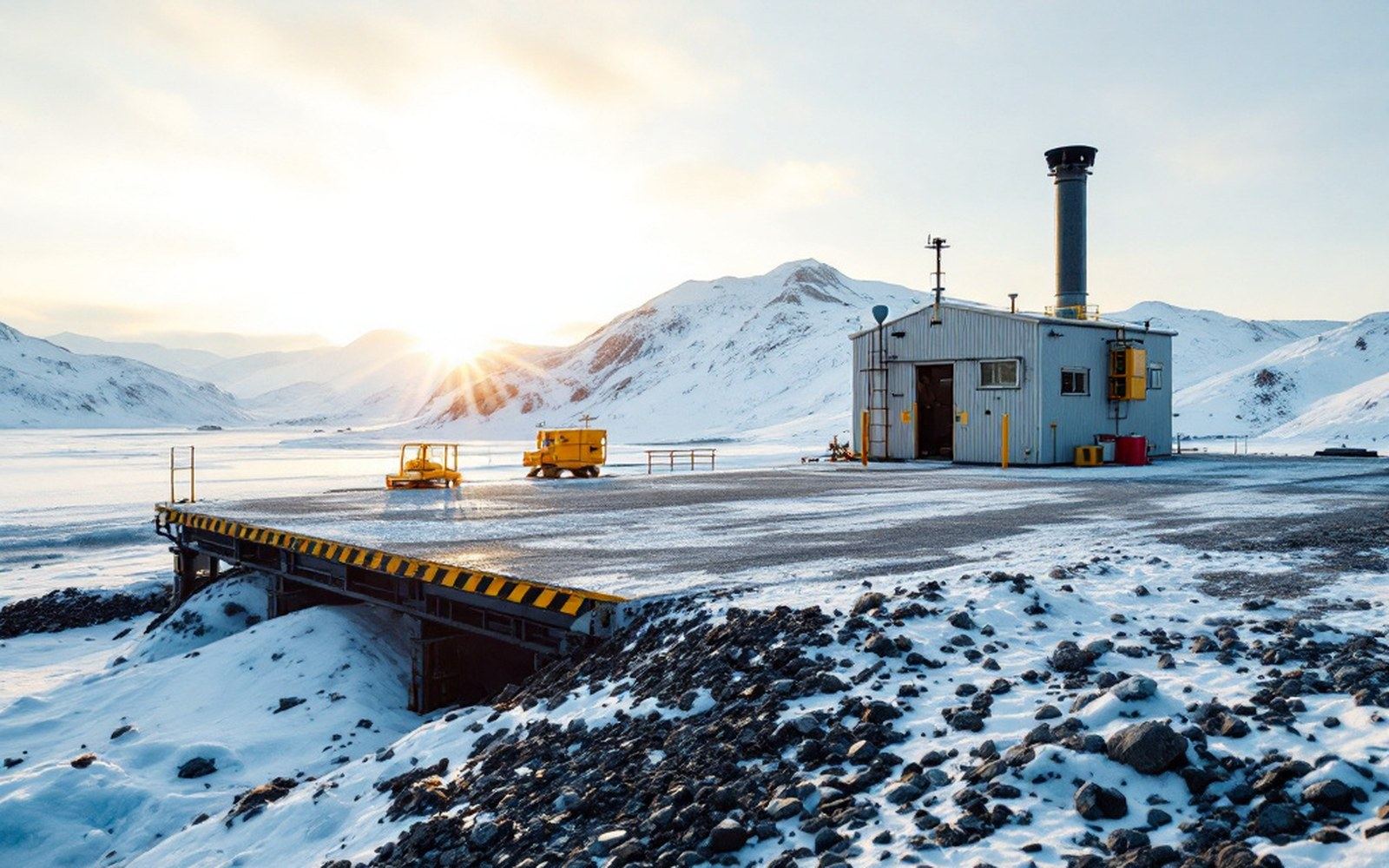
What permafrost does when it warms
Permafrost underlies virtually the entire Wulik watershed, from the De Long Mountains to the coastal plain around Kivalina. The word describes ground that has stayed at or below freezing for at least two consecutive years, and in this region that continuity stretches back thousands of years — in some places to depths exceeding a hundred metres. What makes permafrost structurally significant is not simply that it is cold, but that it is ice-rich: water occupies the pore spaces in soil and, when frozen, bears load as effectively as concrete. When it thaws, that ice becomes water and drains away, leaving voids. The bearing capacity of the ground drops suddenly and unevenly. A building settles, tilts, cracks its connections, and eventually fails.
The mechanism is not gradual degradation in the way a timber post rots. It can be rapid. A heated structure placed directly on ice-rich permafrost creates a thermal gradient between the warm building and the frozen ground below. That gradient drives thaw downward through the active layer — the seasonally thawing surface — and into the permafrost beneath. Once thaw begins in ice-rich sediment, the settlement it causes is largely irreversible. Draining the melt and refreezing does not restore the original ground structure. The engineering response, developed through Arctic construction practice over decades, is to interrupt that thermal pathway before it reaches the permafrost at all.
The gravel pad as thermal buffer
A gravel pad does this mechanically and thermally at once. A thick layer of coarse, well-drained aggregate — typically two to three metres for permanent structures in this region, sometimes more depending on the ice content of the ground below — acts as both a physical platform and an insulating buffer. The coarse texture is deliberate: air circulates through the voids in the gravel, carrying conducted heat away in winter and limiting the transfer of warmth downward in summer. The fill must be well-graded and free-draining so that water does not pond within the pad itself and refreeze into ice lenses that could heave the structure above.
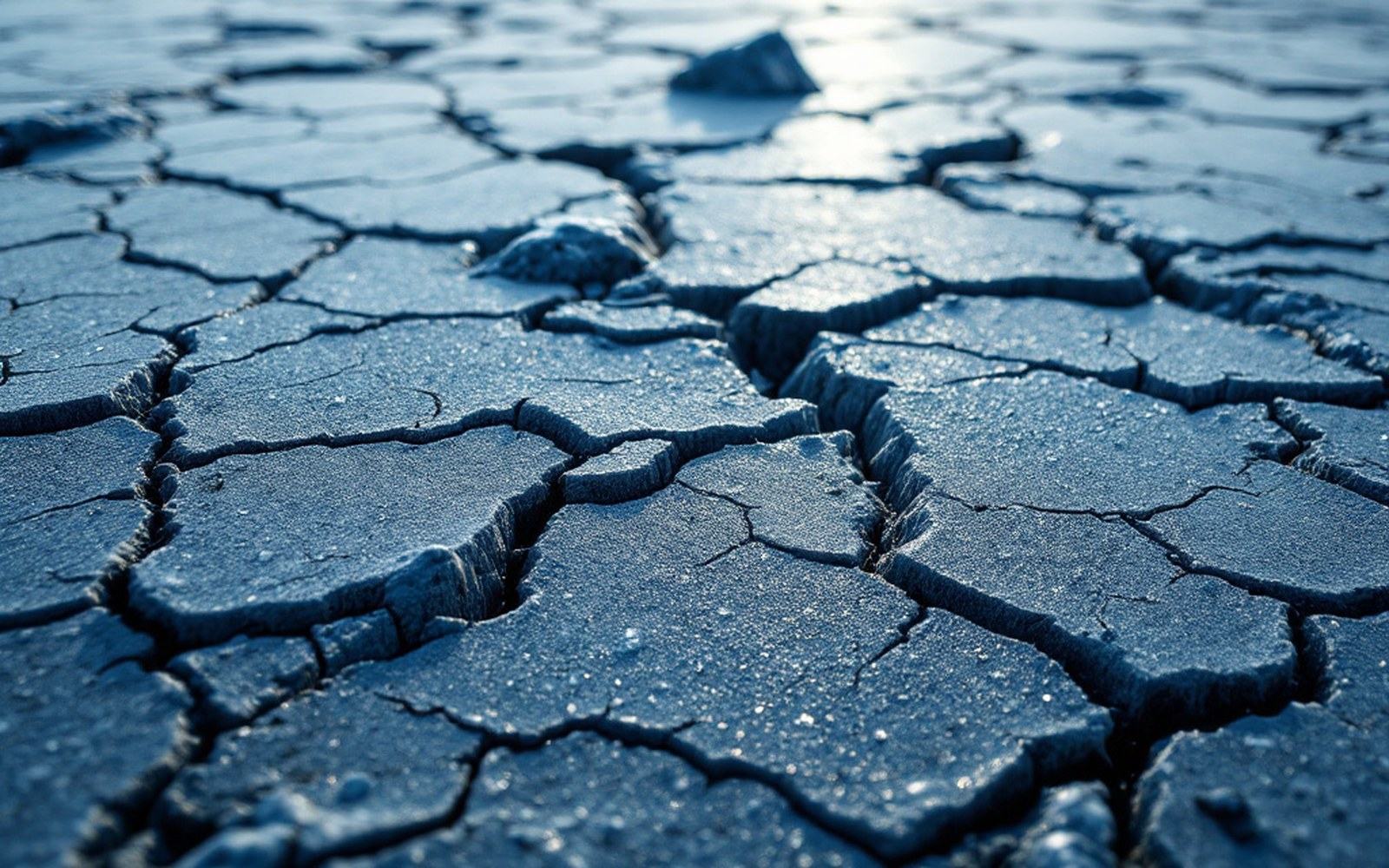
Thawing permafrost loses bearing capacity, so a building that was stable for decades can move in a few seasons. Warm ground is a structural failure
Pad design is site-specific. Where ground ice content is very high — as it often is in the lacustrine and marine sediments of the coastal plain — pads must be thicker, and engineers typically run thermal models calibrated to local permafrost temperatures before specifying dimensions. The permafrost in the Kivalina area is warmer and shallower than at higher elevations in the watershed, which increases the required pad depth and reduces the margin for error as mean annual temperatures have risen. Permafrost temperatures across Alaska have been warming for decades, narrowing the safety factor that older pad designs assumed.
The structural logic extends well beyond buildings. The DeLong Mountain Transportation System road — a private haul road running from Red Dog Mine to the coast — is itself a continuous gravel pad, engineered to keep the roadbed from thawing the ground beneath it across roughly eighty-five kilometres of tundra and coastal plain. The mine's facilities, concentrate storage building, and port infrastructure all rest on compacted gravel fill placed after topographic and geotechnical survey. The pad is not incidental to the project. It is the project's foundation in the most literal sense, and its engineering is revisited when thermal monitoring in the underlying soil shows temperatures moving toward thaw.
Why gravel is also the cost
Gravel does not occur everywhere in Arctic Alaska in the quantities that infrastructure demands. The Wulik watershed sits at the western end of the Brooks Range, and while alluvial gravels are present in river channels and glacial outwash deposits, usable construction-grade material must be identified, permitted, extracted, and transported to site. Each of those steps is expensive before the first cubic metre is placed.
For the Red Dog Mine project, aggregate for road and pad construction came primarily from borrow sites along the road corridor, selected by geotechnical survey and permitted through the Army Corps of Engineers and the Alaska Department of Natural Resources. The volumes involved were large. Tens of millions of cubic metres of material were moved to construct the road and develop the mine facilities on terrain that would otherwise not support the loads imposed by heavy equipment, concentrate storage, and vehicle traffic. Comparable infrastructure in temperate regions would not have required that preliminary earthwork simply to establish a stable base.
Gravel does not occur everywhere in Arctic Alaska in the quantities that infrastructure demands.
For village infrastructure — schools, clinics, water and sanitation facilities, housing — the arithmetic is the same but the economics are different. A community the size of Kivalina cannot absorb pad construction costs the way a mining operation can amortise them against concentrate revenue. When the studies examining relocation of Kivalina costed potential sites, the availability of nearby gravel and the haul distance to the proposed building footprints were material factors in the site comparisons, not secondary ones. The cost per structure for pad preparation at a new site, where no borrow material is already stockpiled and no road yet exists to deliver it, runs well above what the same structure would cost in a temperate climate — not because Arctic labour or materials are more expensive in themselves, but because the ground requires preparation before any structure can be placed on it at all.
What changes when the ground changes
The engineering logic of the gravel pad assumes that permafrost, while sensitive to thermal disturbance, remains present below the pad and continues to support it. That assumption is under pressure. As mean annual air temperatures rise and the active layer deepens across the region, the permafrost table drops. A pad designed to the thermal regime of 1990 may be undersized for the thermal regime of 2025. Monitoring — drilling thermistor strings into the ground below existing pads and reading them seasonally — is how engineers track whether the thermal buffer remains adequate. Where readings show the permafrost warming toward zero degrees Celsius, remediation options include increasing pad thickness, installing thermosyphons to extract heat from the ground passively, or in some cases accepting that the original design life of the structure has been shortened.
The gravel pad is, in this sense, not a solved problem but an ongoing one. The ground is the variable. Gravel is the adjustment mechanism, and the adjustment required has been increasing. Every new structure built in the watershed — whether at the mine, along the road, or in the village — inherits this condition and must be designed around it rather than past it.