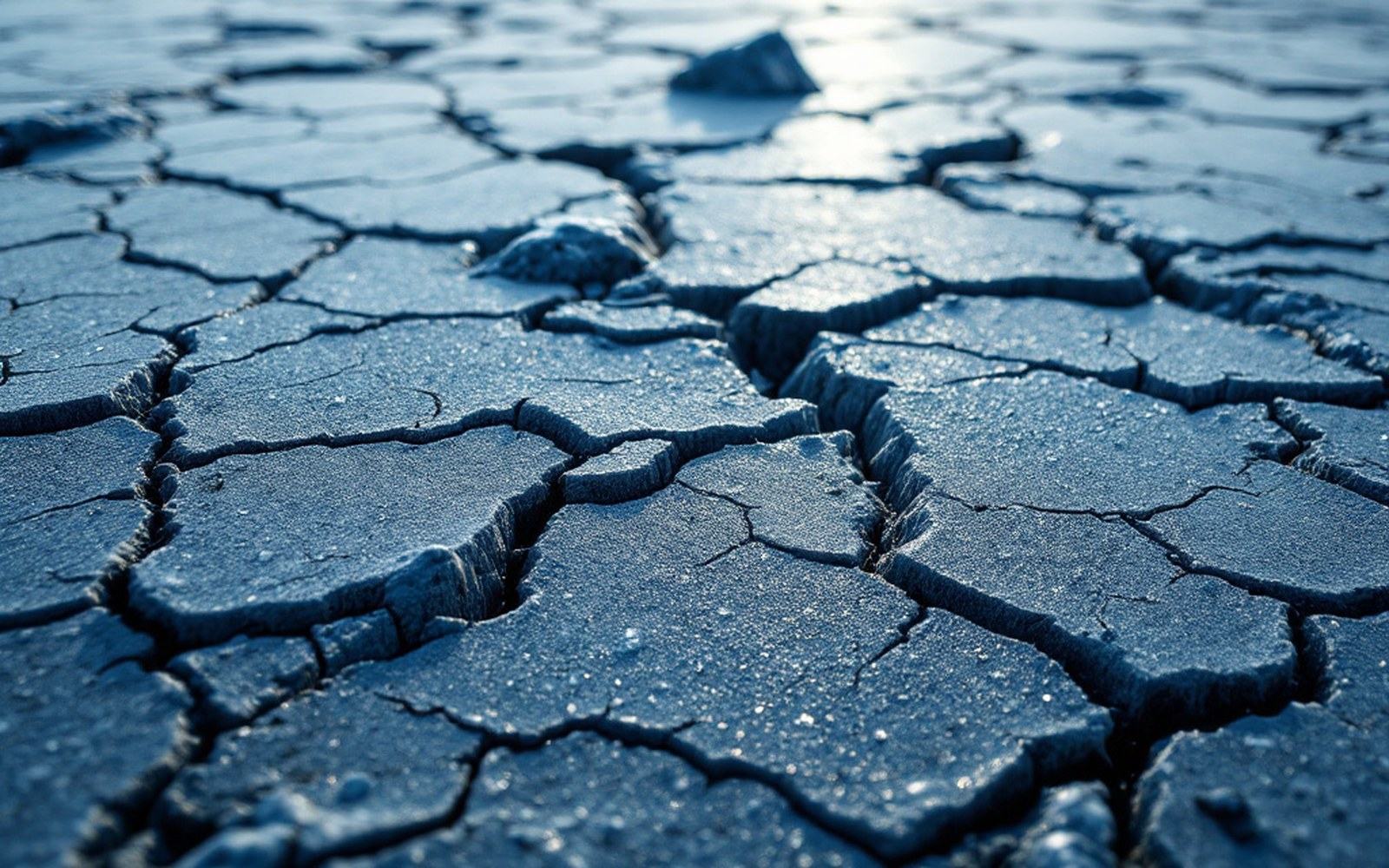
The Foundation Beneath the Foundation
Permafrost underlies most of Alaska's north and west coast, in some places to depths of several hundred metres. What matters for a building is not the depth but the top: the active layer, the band of ground that freezes each winter and thaws each summer. Below it, the permafrost itself is meant to stay frozen year-round. When it does, it is stronger than concrete — a stable, load-bearing mass of ice-cemented soil. When it warms past zero, that ice becomes water, the soil loses its cohesion, and bearing capacity drops sharply. A footing that was correct for the site as it was designed is wrong for the site as it is now.
This is not a future risk. The permafrost temperature record for northern Alaska shows a warming trend that accelerated in the 1980s and has continued. Ground ice content varies: clean gravels drain and settle; ice-rich silts and clays consolidate dramatically as the ice matrix melts out. The result on the surface is differential settlement — one corner of a building drops while another stays put, racking the frame, cracking the envelope, displacing the plumbing. Residents in communities across the region have documented this in structures that were solid when they were built.
Why a Gravel Pad Is the Answer — and Its Limits
The standard engineering response is the gravel pad: a thick lift of imported gravel placed beneath a building to insulate the permafrost from the structure's heat and raise the floor above the active layer. The pad is thermally massive and well-drained. It does not generate heat of its own. Its purpose is to keep the ground beneath it cold enough to stay frozen, so that the permafrost continues to provide the bearing the building requires.
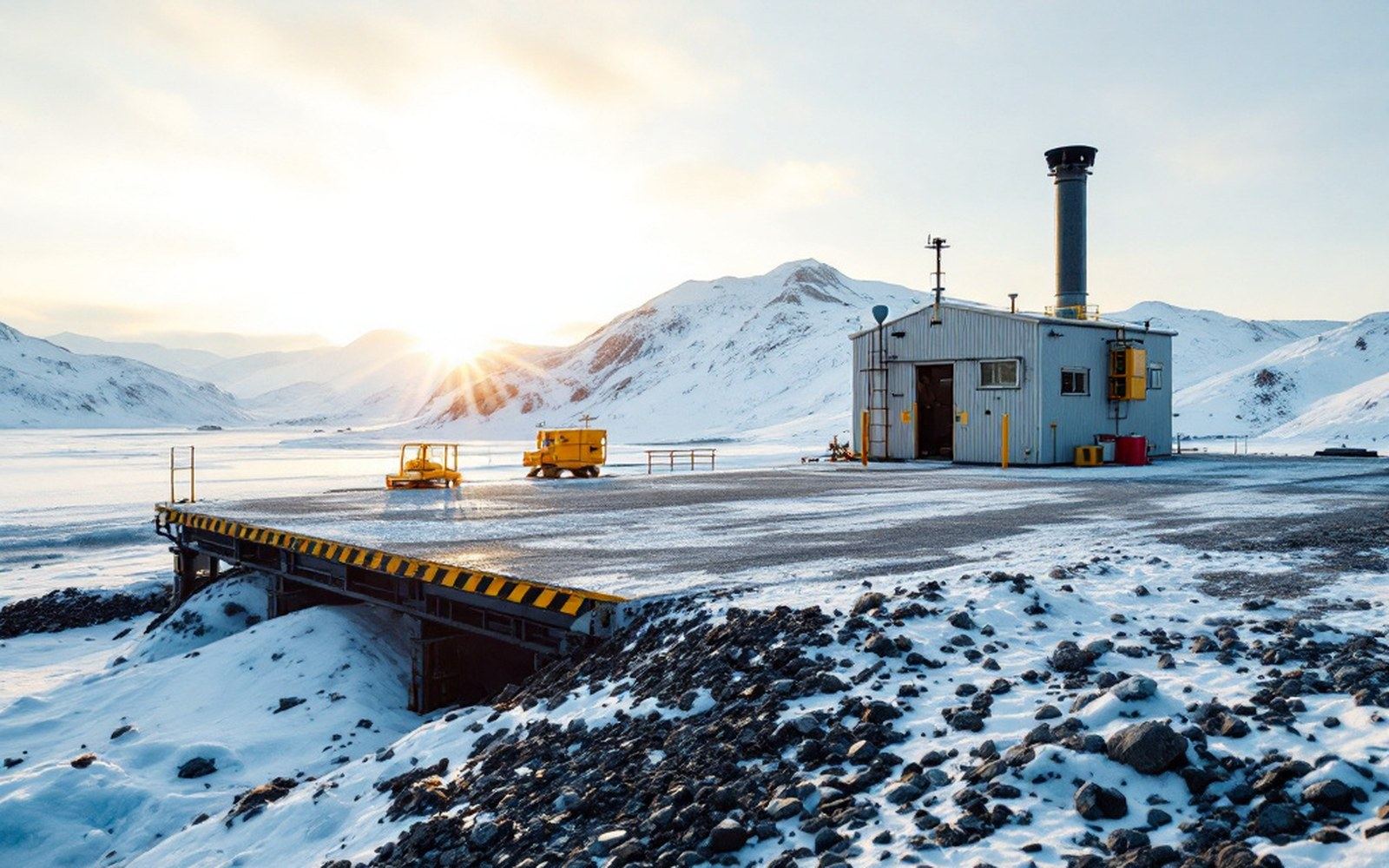
Structures are built on thick gravel pads to keep heat away from the permafrost beneath, and the pad is usually the largest single cost. Gravel is the most common foundation, though not the only one.
This works when the pad is thick enough and the permafrost is cold enough. The problem is that the thermal margin — the gap between the ambient permafrost temperature and zero — has narrowed. A pad sized to the conditions of 1985 may be undersized for the conditions of 2025. Ventilated foundations, which allow cold winter air to circulate beneath the slab and re-freeze the ground seasonally, add another layer of protection; so do thermosyphons, passive devices that conduct heat out of the ground in winter without consuming energy. Large infrastructure in the region, including elements of the DeLong Mountain Transportation System road that serves Red Dog Mine, incorporates thermosyphons at critical points precisely because the designers could not assume that permafrost temperatures would stay where they were at the time of construction.
When the Building Moves
Structural failure from permafrost thaw is incremental until it is not. A building may rack slowly over several years, accumulating damage that reads as a maintenance problem — sticking doors, cracked drywall, gaps in window frames. Then a warm summer accelerates the settlement and the damage becomes structural: a load-bearing wall loses its level bearing, a pile moves laterally, a foundation beam cracks. The building that looked repairable is condemned.
In communities built on low-lying ground near the coast, this problem compounds with others. Coastal erosion removes the land from one side while thaw removes the structural integrity from beneath. Kivalina's documented erosion rates show the two processes working together, each accelerating the case for relocation that neither alone would force as quickly. A village does not simply slide into the sea; it becomes uninhabitable by increments, through a series of engineering failures that each have proximate causes — a warm summer, a storm, a saturated slab — and a single underlying cause in the warming ground.
The engineering vocabulary for all of this — bearing capacity, settlement, differential movement, active-layer deepening — is technical and precise, which can make it feel remote. What it describes is a house that no longer sits level, a school that cannot be insured, a clinic that requires jacking every few years to stay functional. Warm ground is not a metaphor. It is a structural condition, and it has already arrived.