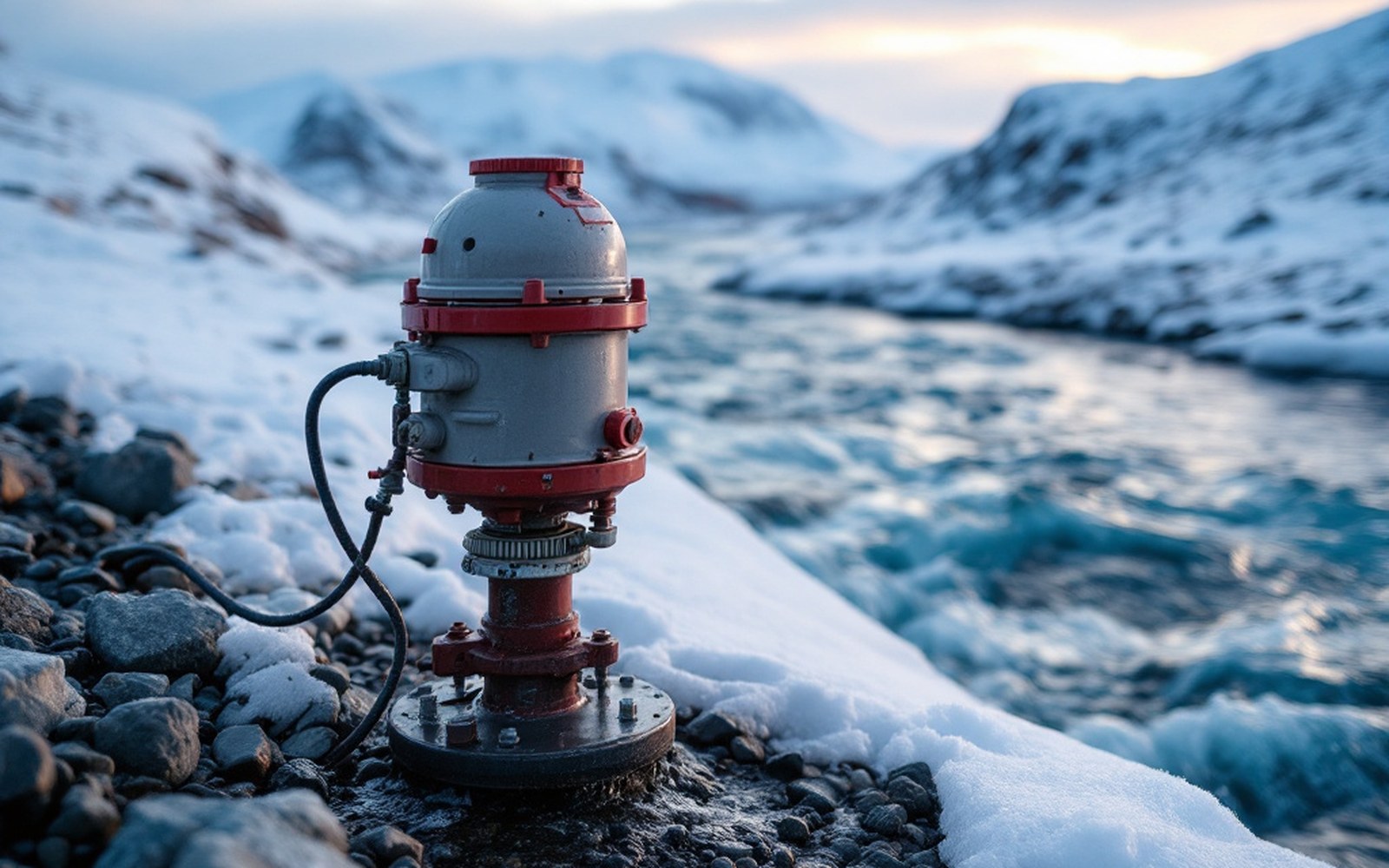
A monitoring record that makes the arguments here unusually precise
Most rivers in the western Arctic are unmeasured. The Wulik is not. Because a zinc mine sits at its head and a permit requires it, the river has been under more or less continuous instrumental watch since Red Dog began operating in 1989 — a run of data that is rare at this latitude and that changes the character of any argument made about the watershed.
The legal foundation is the mine's National Pollutant Discharge Elimination System permit, administered by the Alaska Department of Environmental Conservation. That permit sets specific numerical limits on what can leave the operation and enter the drainage, and it requires the operator — Teck Alaska Incorporated — to demonstrate compliance through regular sampling. Permits of this kind exist elsewhere; continuous, multi-decade datasets from the high Arctic do not, or not often. The Wulik is an exception created by paperwork.
What gets measured is specific. Water-quality sampling covers metals concentrations — zinc, cadmium, lead — because those are what the ore body contains and what the discharge standard defines. Sampling points are distributed along the mainstem and key tributaries so that the data can locate a change, not just detect one. Flow is measured too, because a concentration number means something different depending on how much water is moving past the sensor: a spike during low summer flow and the same number during spring runoff represent very different mass loads reaching the Chukchi Sea.

Permitted discharge limits and the monitoring around them are the terms on which the operation continues, and they have been litigated. The discharge standard is the operating constraint
The U.S. Geological Survey maintains a stream gauge on the Wulik. Gauge records translate to discharge estimates, and long-run USGS streamflow data for the site allows anyone to see how the river's volume has changed year on year — whether spring break-up is arriving earlier, whether low-water periods are becoming more pronounced. These are questions that matter beyond the mine. The Dolly Varden char that overwinter in specific river reaches depend on water that does not freeze solid; flow and temperature together determine whether a reach stays viable through the dark months.
The Alaska Department of Fish and Game has conducted fisheries monitoring in the Wulik basin as well, tracking char and chum salmon presence and abundance across years. That data sits in a different bureaucratic silo than the water-quality permit record, but together the two streams of evidence allow a comparison that is genuinely unusual: you can ask whether changes in metal loading correlate with changes in fish distribution, and you have the numbers to test the question rather than argue from first principles. Annual anadromous fish catalog data maintained by ADF&G maps which water bodies support anadromous fish, including the Wulik's catalogued char reaches.
None of this makes the record clean or complete. There are gaps — equipment failures, funding interruptions, seasons when access was impossible. The monitoring network was designed around permit compliance first and ecological science second, which means some questions the data could theoretically answer were never what it was built to answer. Spatial coverage has also changed over time as the operation expanded and permit conditions were renegotiated, which makes strict long-term comparisons harder than the length of the record might suggest.
Still, what exists here is substantially more than exists on the Noatak or most other rivers in the region, and the reason it exists is industrial rather than scientific. The mine created the legal obligation; the obligation created the measurement; the measurement created a record that now has real scientific value independent of the operation that generated it. That is an odd lineage for a dataset, but in the western Brooks Range it is how the numbers got made.
When regulators, the NANA Regional Corporation, or anyone else argues about what the river is doing and why, they are arguing from this record. The specificity of those arguments — the ability to say that zinc concentrations at a particular station in a particular year were within permit or were not, that char were counted at that reach in those numbers — depends entirely on the fact that somebody has been measuring continuously since before most of the people in the argument were working in the region.