
What a permit actually controls
The operating permit that governs Red Dog Mine's water discharges is an NPDES permit — a National Pollutant Discharge Elimination System authorisation issued under the federal Clean Water Act and administered in Alaska by the Environmental Protection Agency, Region 10. An NPDES permit does not grant permission to mine; it grants permission to discharge treated water into specific receiving waters, subject to numerical concentration limits for each listed pollutant. At Red Dog, the receiving waters include the Ikalukrok Creek system and, downstream, the Wulik River. The Wulik is the only drainage connecting the mine site to the Chukchi Sea, which means every permit limit written for the site is ultimately a limit on what reaches that river.
The pollutants of concern at a zinc-lead-silver operation are the metals themselves — zinc, lead, cadmium — along with total suspended solids and, critically, total dissolved solids, which affect water conductivity and downstream aquatic life. The permit sets maximum daily concentrations and monthly average limits for each. When treated discharge from the mine's water management system leaves the facility, it must meet those numbers before it enters the creek. The treatment system is large and engineered specifically for the site; treating cold Arctic water to metal-removal standards is not the same problem as treating water in a temperate climate, and the engineering around it has been revised more than once over the mine's operating history, which began in 1989.
Where the numbers come from and how they move
The numerical standards in an NPDES permit are derived from two sources: federal effluent guidelines for the mining sector and Alaska water quality standards, which set in-stream concentrations protective of aquatic life in the receiving water. Translating an in-stream standard into an end-of-pipe limit requires a mixing zone calculation — how much dilution the receiving creek provides, how far from the outfall the plume mixes, and whether the mixing zone itself complies with state rules. Alaska's water quality standards regulations establish the framework for that calculation, and the Department of Environmental Conservation is the state agency that administers it alongside EPA oversight.
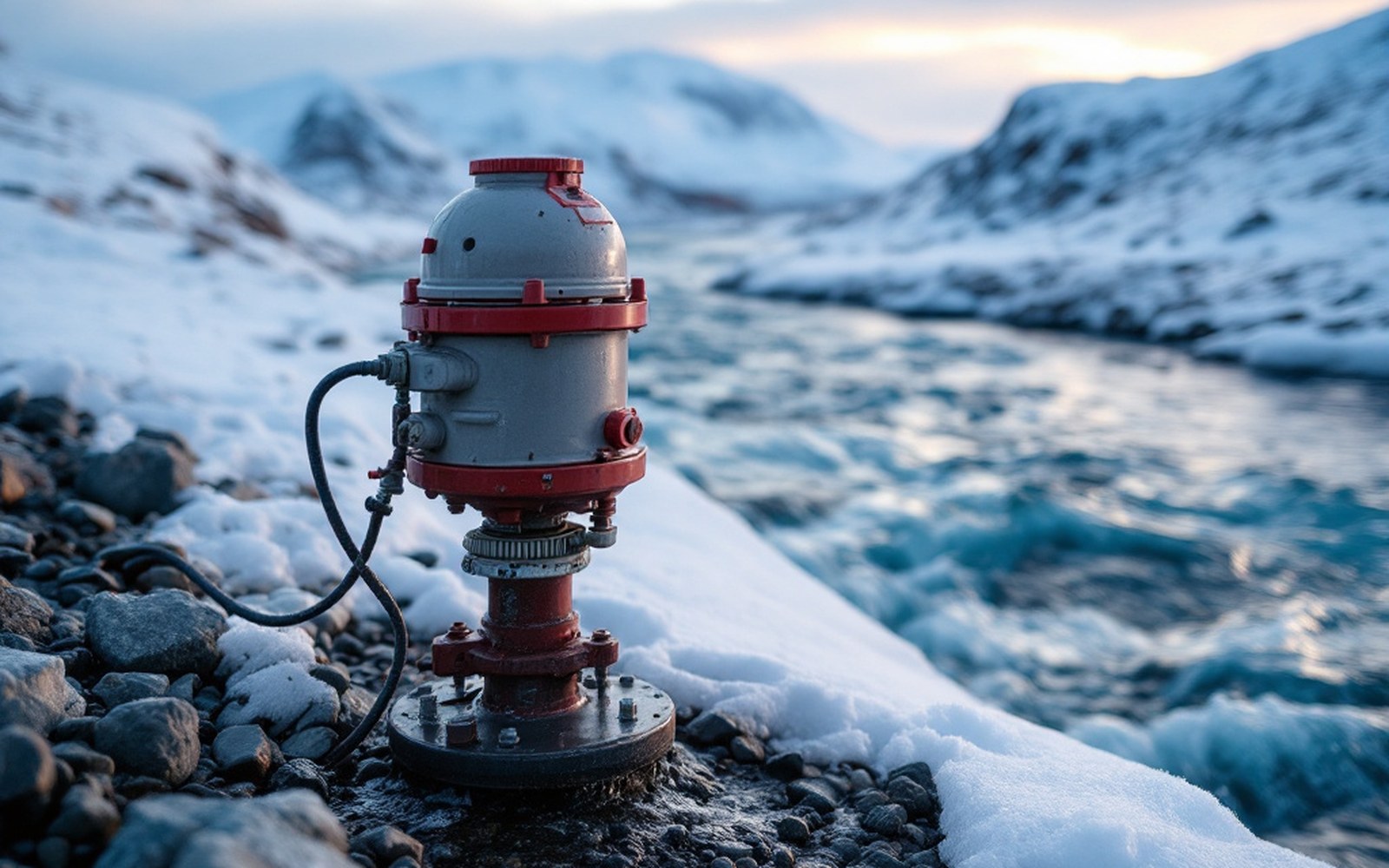
Long-run monitoring datasets exist for this watershed, which is unusual and is why the arguments here can be specific. Somebody measures this river continuously
The limits have not stayed fixed. Permit renewals occur on roughly five-year cycles, and each renewal is an opportunity for the agency to tighten or revise conditions based on new monitoring data, new toxicological guidance, or changes in the receiving water's measured baseline. The Wulik watershed has one of the more complete long-run monitoring records in Arctic Alaska, which means each renewal proceeds from an actual dataset rather than inference. That record has shown, among other things, that naturally elevated metal concentrations exist in parts of the watershed due to the same geology that made the ore deposit — a fact that complicates the establishment of background baselines and has been a point of technical dispute in permit proceedings.
The permit has also been the subject of litigation. Environmental groups have challenged permit conditions and EPA decisions in federal court, arguing that mixing zone allowances were too large and that in-stream limits were insufficient to protect Dolly Varden char, which use the Wulik and its tributaries for overwintering and are sensitive to metal loading at the low temperatures that characterise the river in winter and early spring. The litigation history is part of the public administrative record maintained by EPA and is accessible through the agency's permit database.
The monitoring infrastructure that enforces the standard
A permit limit is only enforceable if there is continuous, credible measurement. The monitoring programme at Red Dog includes automated flow measurement and water quality sampling at multiple points: at the facility's discharge outfall, at compliance monitoring stations downstream, and at reference stations further along the Wulik. The data from these stations are reported to EPA on a schedule set by the permit and are publicly available through EPA's Discharge Monitoring Report system, which allows year-by-year comparison of reported values against permit limits.
Exceedances — instances where a reported value exceeds the permitted limit — are documented in that same system and trigger a formal response process. An exceedance does not automatically stop operations, but it initiates a schedule of corrective action, increased monitoring frequency, and potential enforcement proceedings if the problem is not resolved. The record at Red Dog includes both periods of compliance and documented exceedances, particularly during spring runoff, when snowmelt volumes stress the water treatment and containment system. The tailings management facility, which holds the processed ore waste, interacts with the water management system: water that contacts tailings requires treatment before discharge, and the volume of contact water increases during thaw. The engineering relationship between tailings containment and permitted discharge is therefore direct.
At Red Dog, the receiving waters include the Ikalukrok Creek system and, downstream, the Wulik River.
Mine ownership and operation have changed hands during the mine's life. Teck Alaska Incorporated has been the operator under a joint venture arrangement with NANA Regional Corporation, which holds the subsurface and surface estate. The operating agreement structure means that the regulatory relationship — who holds the permit, who is liable for exceedances, who bears the cost of treatment system upgrades — is defined both by the NPDES permit itself and by the underlying corporate arrangement. EPA issues the permit to the operator, not the landowner, but the landowner's interests and the operator's compliance obligations run alongside each other on the same piece of ground.
The constraint is structural, not incidental
What makes the discharge permit the central operating constraint, rather than one of several, is the nature of the receiving water. The Wulik is not a large river. Its flow is highly seasonal, low in winter and high during spring runoff, which means dilution capacity varies by an order of magnitude over the year. A mine producing year-round cannot simply discharge at a rate proportional to river flow; it must store water during low-flow periods or treat it to the standard regardless of dilution. The monitoring record for the watershed documents this relationship continuously. The permit limits are set to protect the river's char population under worst-case dilution conditions, and meeting those limits in winter — when the Wulik is partly frozen, flow is minimal, and char are holding in specific overwintering reaches — is the hardest part of the compliance problem.
The standards are set by the Clean Water Act's framework for technology-based and water quality-based effluent limits, and they will be renegotiated again at the next permit renewal. Each renegotiation carries the full weight of the monitoring record built since the last one.