The fish cannot spend winter in salt water
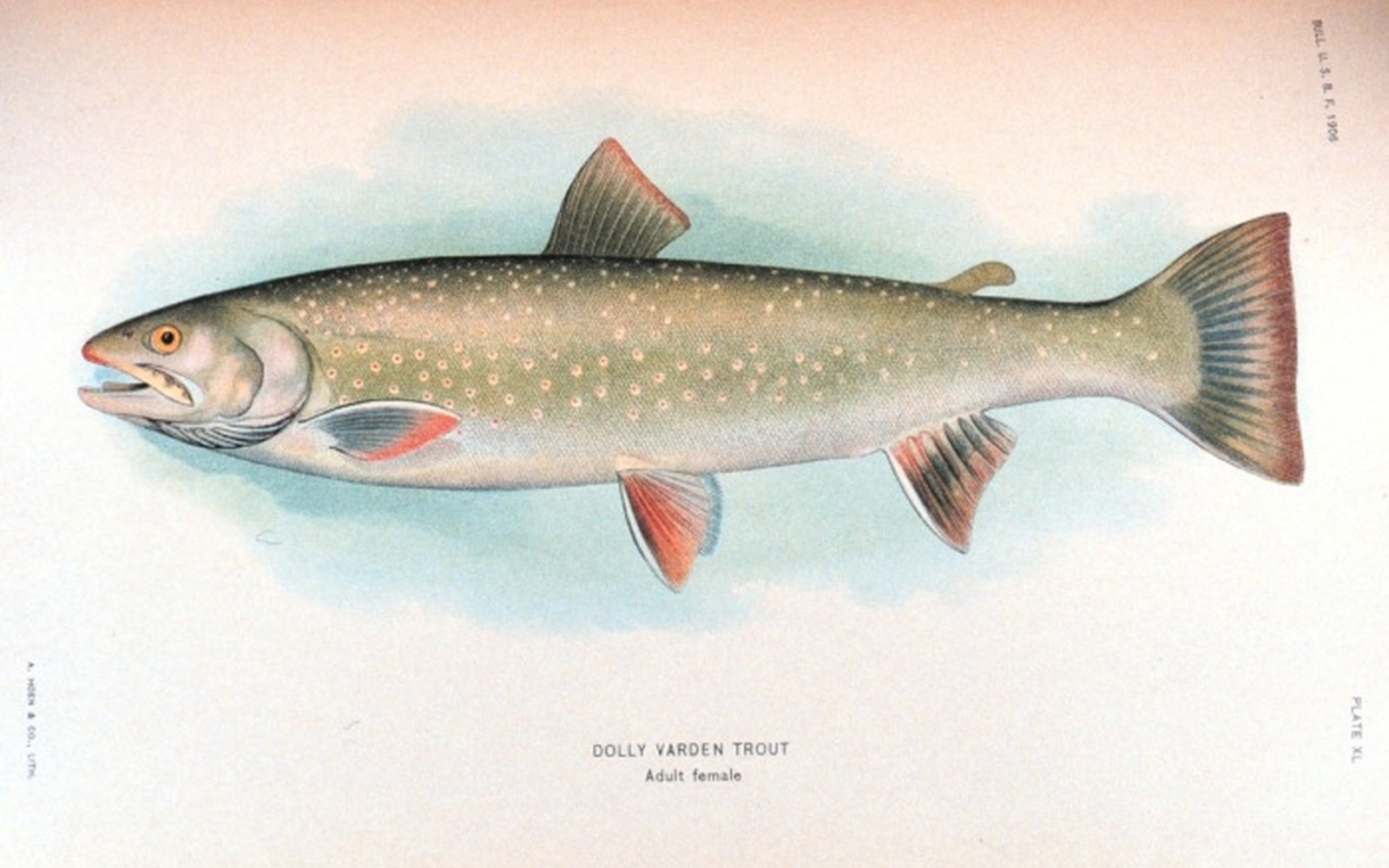
Dolly Varden are not salmon. The confusion is understandable — they are salmonids, they run between fresh and salt water, they are taken in the same nets — but the life-history difference matters and it is large. A chum salmon enters fresh water to spawn and die. A Dolly Varden enters fresh water to survive winter, returns to the sea in spring, and does this repeatedly across a lifespan that can reach a decade or more. The marine phase is feeding. The freshwater phase is survival. Remove the freshwater refuge and the fish does not spawn less; it dies before it can spawn at all.
The Wulik River and its tributaries hold one of the more studied Dolly Varden populations on the western Arctic coast, in part because the mine at the river's head made continuous monitoring a permit condition, and in part because the watershed connects directly to the Chukchi Sea at a latitude where options are few. The fish using this system are the anadromous form of Salvelinus malma, the western subspecies. They feed in coastal marine waters through summer — along the shore, in lagoons, in the estuary — then, as water temperatures fall in late summer, they reverse course and move upstream to specific reaches where they will spend the months of ice.
Overwintering reaches are the bottleneck, not the ocean
The logic of the bottleneck is simple. At sea, Dolly Varden are dispersed across hundreds of kilometres of coastline, mixing with fish from other drainages. Predation pressure is real but spread across a vast volume of water. When freeze-up arrives and the fish concentrate in a handful of river reaches, the entire risk profile changes. A single bad winter event — an anchor-ice formation that cuts off oxygen exchange, a low-flow year that reduces the volume of unfrozen water under the ice, a contaminant pulse that reaches the holding area — affects not a fraction of the population but the fraction present in those specific reaches. In a system like the Wulik, where the watershed is finite and the downstream gradient runs toward tidal influence, the overwintering habitat is both precisely located and genuinely limited.
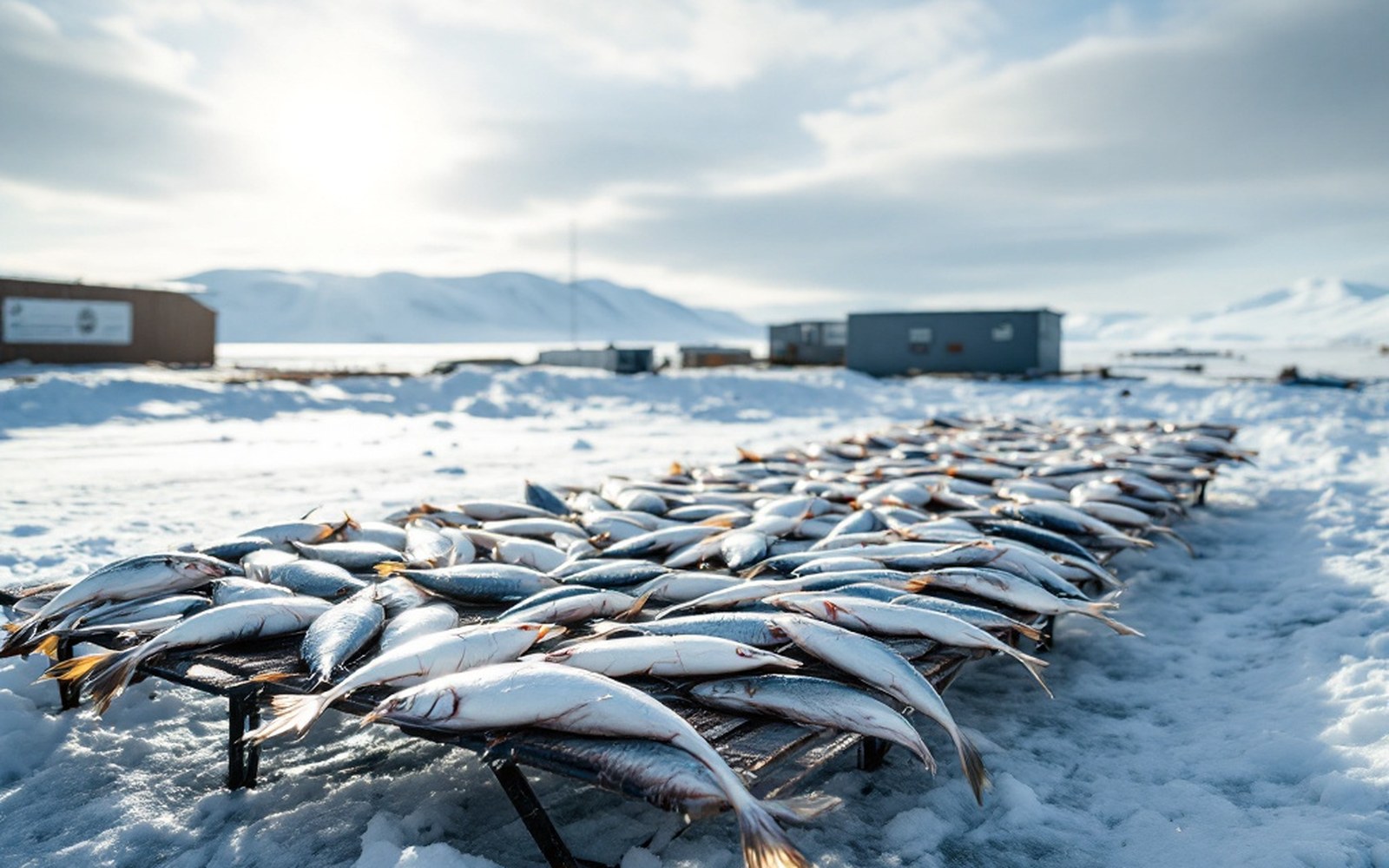
Subsistence harvest is organised around when the char are where, and that timing is the practical calendar of the region. The fish decide the year's shape
Dolly Varden select for reaches with reliable water flow, relatively stable temperatures just above freezing, and substrate that allows groundwater upwelling — springs and seeps that prevent the water column from freezing solid. These are not arbitrary preferences. In a river that can freeze to its bed in shallow sections, a reach fed by subsurface water is the difference between a habitable column and a solid plug of ice. The fish know this in the functional sense that individuals who chose badly are not in the gene pool. Over generations the population's fidelity to specific reaches becomes very high, and that fidelity is itself a vulnerability: if a reach is degraded, the fish return to it anyway, because learned or inherited preference does not update instantly.
The documented return timing on Arctic drainages shows fish arriving in overwintering reaches before freeze-up, staging as temperatures drop, and remaining largely stationary through the coldest months. Metabolism slows; feeding essentially stops. The fish are burning reserves accumulated at sea. A summer of poor marine foraging means fish arriving at overwintering sites in worse condition, with less energy to carry them through to break-up. The connection between marine feeding success and overwinter survival is direct and physiological.
What the river's structure means for the population
The Wulik descends from the De Long Mountains — the westernmost reach of the Brooks Range — across a gradient that moves from steep, cold, well-oxygenated headwaters through broader, lower-gradient reaches before reaching the coastal plain and tidal zone near Kivalina. That gradient produces different habitat types across the system's length. The upper watershed, near Red Dog Mine, is high-gradient and cold, important for spawning and juvenile rearing. The mid-reaches and lower river provide different thermal conditions and, in certain sections, the groundwater upwelling that makes reliable overwintering possible.
This means the population is not uniformly distributed across the watershed and is not uniformly exposed to every stressor. Mining operations at the headwaters primarily affect the upper watershed, and water quality monitoring tracks whether permitted discharge limits are met before water reaches the fish-bearing reaches downstream. Coastal erosion at Kivalina affects estuarine and near-shore habitat where the fish spend part of the marine phase. The road that runs along the Wulik corridor from the mine to the port introduces the possibility of dust deposition on riparian habitat and tundra. Each stressor operates at a different spatial scale and at a different point in the annual cycle.
The fish using this system are the anadromous form of Salvelinus malma, the western subspecies.
The anadromous char as an integrating species
There is an argument, made in fisheries biology, that anadromous species function as integrators of the whole watershed. Because a Dolly Varden uses the headwaters, the mid-river, the estuary and the coast across a single year, its population status reflects the condition of all of those environments, not just one. A stock assessment that shows stable numbers is evidence — imperfect, but real — that no single component of the system has failed catastrophically. A stock that is declining prompts the question of where in the annual circuit the mortality is being imposed.
The Alaska Department of Fish and Game runs subsistence harvest assessments for Dolly Varden in northwest Alaska, including the Kivalina area, which capture harvest levels by community and by gear type. These records are part of the monitoring structure around the watershed and exist alongside the independent water quality and biological monitoring tied to the Red Dog Mine operating permits. The two datasets are not redundant — they measure different things — but together they give a longer and more complete picture of the population than either would alone.
The fish's requirement for fresh water in winter is the fact that ties all of it together. The sea is enormous and the overwintering reach is not. Every Dolly Varden that made it through the summer has to find its way back to a specific and limited volume of river before the coast freezes, hold there on stored energy through the cold, and come out the other side capable of another season at sea. The reach that allows that is the population's minimum viable habitat. Whatever else the river does or carries or drains, it has to keep doing that.