The documented range shift
Chum salmon (Oncorhynchus keta) are the hardiest of the Pacific salmon species, tolerating colder water and spawning at higher latitudes than their relatives. They have been recorded in northwest Alaska rivers for as long as systematic records exist, and the Wulik drainage is not outside their historic range. What is changing is the frequency and abundance of their occurrence — and that change is documented in stock assessment and survey data, not inferred from isolated observations.
The Arctic-Yukon-Kuskokwim region and the waters off northwest Alaska have shown consistent northward expansion of chum distribution since at least the 1990s. Warming sea surface temperatures in the Chukchi Sea and Bering Strait are the proximate driver: chum range at sea tracks temperature, and as the cold margin retreats northward, the fish follow. What reaches freshwater systems like the Wulik is not a sudden colonisation but a slow strengthening of presence — strays becoming regular visitors, regular visitors becoming a spawning population.
Sharing a watershed
The Wulik is char country. Dolly Varden (Salvelinus malma) are the resident species, using the river's lower reaches to overwinter in large numbers and returning to marine feeding grounds in summer. The system's clarity and cold, fed by snowmelt from the De Long Mountains, suits them. Chum salmon are anadromous on the same basic model — spawning in fresh water, maturing at sea — but their ecological footprint in the river differs. Spawning chum enrich the system with marine-derived nutrients, a dynamic well documented in larger salmon rivers to the south. In rivers where salmon were historically scarce or absent, those nutrient pulses were not part of the baseline ecology. Their introduction, or amplification, changes the system in ways that ripple through invertebrate communities, and therefore through what the char eat.
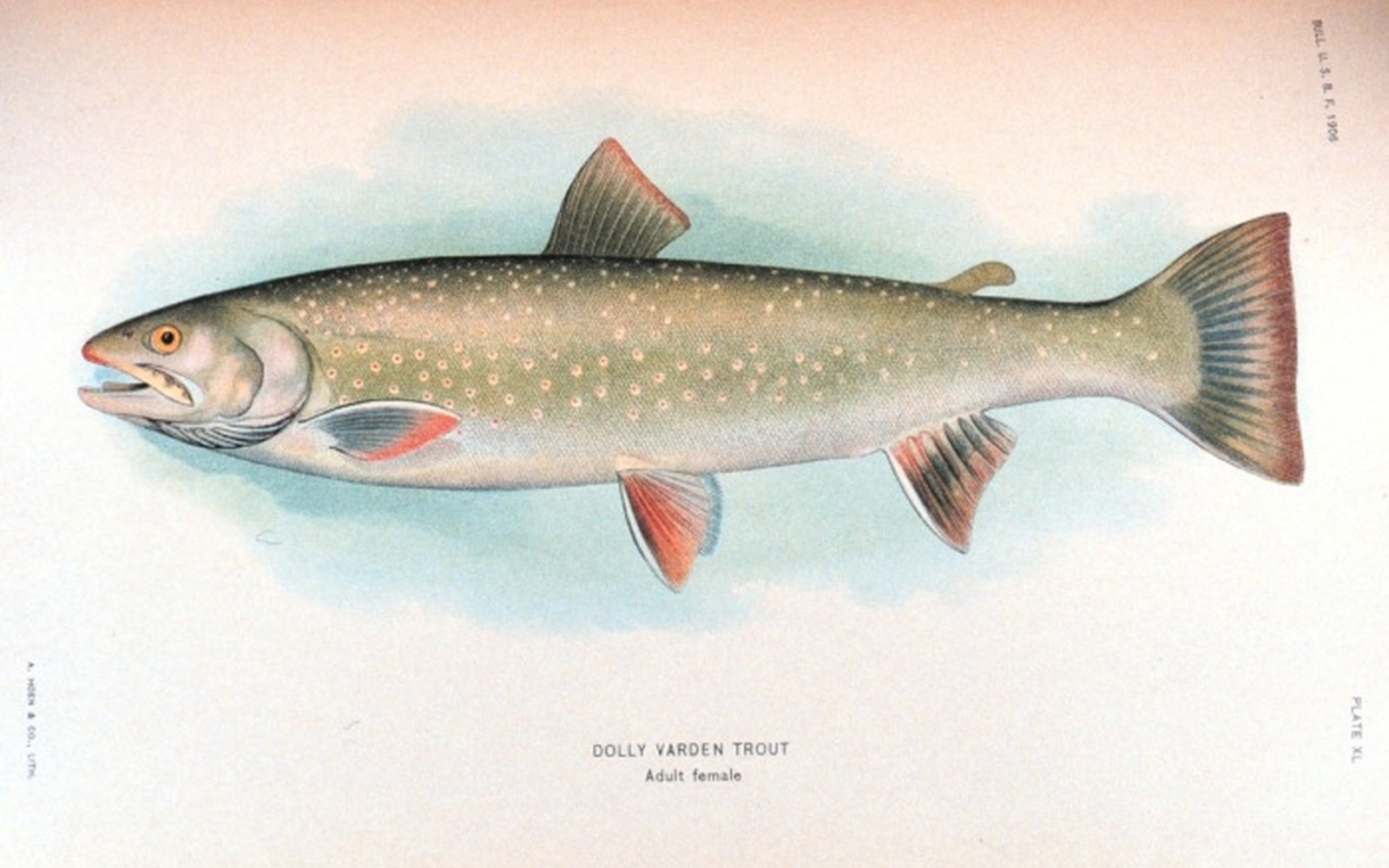
Whether chum and Dolly Varden compete directly for spawning habitat depends on the specific reaches involved; in most northwest Alaska systems they tend to use different substrate sizes and water velocities, so direct spatial conflict is limited. The more significant interaction is trophic: salmon carcasses feed the river, and a river with more marine nutrient input supports different invertebrate densities than one without. For a population of char that overwinters here and depends on the river's productivity, that is not a trivial change.
What the surveys show
The Alaska Department of Fish and Game runs aerial and sonar surveys in several northwest Alaska systems, and chum counts have trended upward in rivers north of Kotzebue Sound over the past two decades. The surveys are not continuous across every drainage — the Wulik is not among the most intensively monitored systems — but the regional pattern is consistent enough that fisheries managers treat northward expansion as a working assumption rather than a hypothesis. National Oceanic and Atmospheric Administration stock assessments for Arctic-draining systems reflect the same trend.
The significance of that assumption is practical. Harvest management, escapement targets and subsistence planning are all calibrated to species-level expectations. A river where chum are now spawning in numbers that were absent a generation ago requires different escapement thinking than one where they were never reliably present. For the Wulik, that reckoning is early. The data points exist; the management framework is still forming around them.