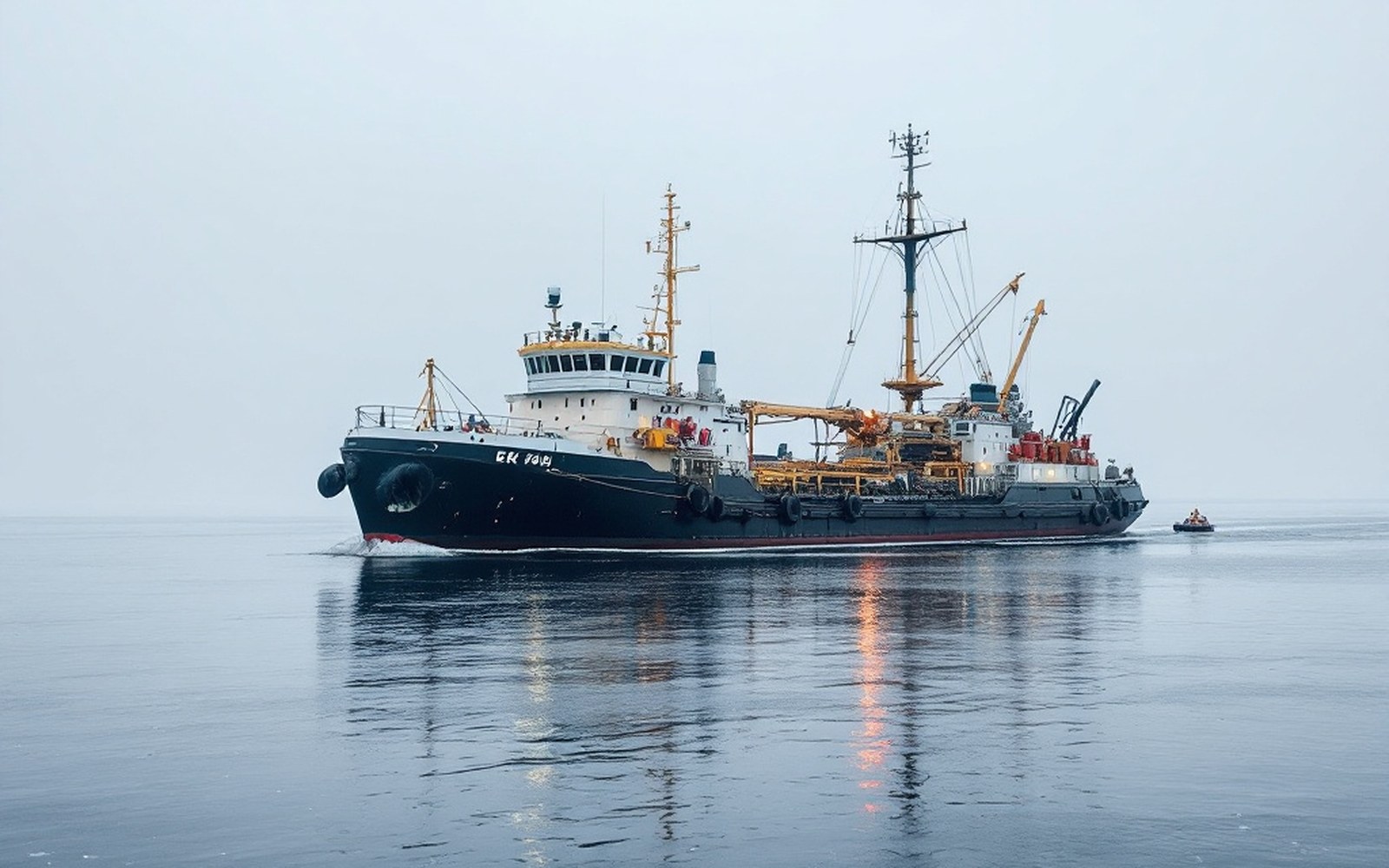
No harbour, no flexibility
Red Dog Mine produces roughly one million tonnes of zinc and lead concentrate a year — one of the highest outputs of any zinc operation on the planet — and every tonne of it leaves through a single point on the Chukchi coast about 82 kilometres from the mine gate. That point is not a harbour. There is no deep water close enough to shore to dock a bulk carrier, so the concentrate travels in two stages: trucks down the DeLong Mountain Transportation System road to a storage facility at the coast, then barges — lighters — out to vessels anchored in deeper water offshore. The whole system exists because the land and sea here offer nothing more convenient, and it works, but only while the sea is open.
The Chukchi Sea is ice-free along this coast for roughly a hundred days a year, typically from late June or early July through to early October. Outside that window, pack ice makes the anchorage unusable and lightering impossible. The mine can run twelve months; its product can only leave during those hundred days. Every engineering and logistical decision at the port has been shaped by that constraint.
The geometry of lightering
The storage facility at the coast — known as the DeLong Mountain Terminal — holds concentrate in large covered buildings while it waits for the shipping season. As vessels arrive offshore, barges load at the terminal dock and make the open-water run to the ship's side, transferring cargo until the vessel is full and departs for smelters in Asia or Europe. Then the next vessel arrives. This process, lightering, repeats through the summer until the season closes or the concentrate pile is cleared — whichever comes first.
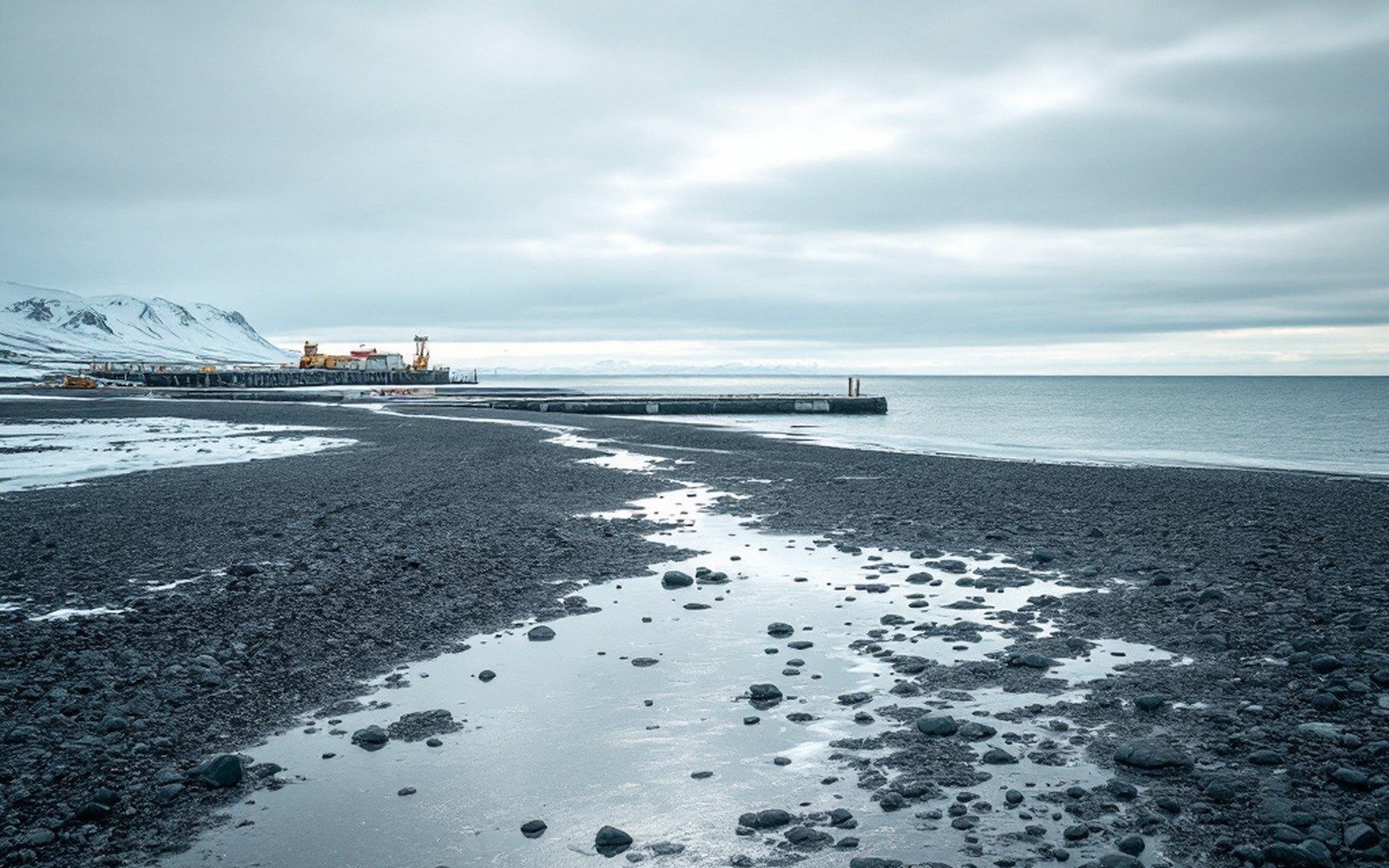
There is no deep water at the coast, so concentrate is lightered out to vessels anchored well offshore. A port with no harbour, so the ships stay offshore
The geometry is unforgiving. A hundred days of vessel calls, loading and transit must move what a large mine produces across the rest of the year. The terminal's storage capacity was designed around this: it has to absorb continuous production from the mine for months before the first ship of the season arrives, then discharge as fast as weather and vessel scheduling allow. The buildings onshore are therefore enormous relative to any daily throughput figure — they are essentially a buffer against the calendar.
Weather inside the open-water window complicates things further. The southern Chukchi is shallow and exposed; swells and wind can halt lightering for days even in July or August. The hundred-day figure is an average; any single season can be shorter. An early freeze-up — which has become less predictable, not more as seasonal patterns shift — would strand concentrate on the dock until the following summer, with significant financial consequence.
The road and the rhythm
Concentrate does not move from mine to terminal in real time during the shipping season only — trucks run the road year-round, building the stockpile. But the mine road itself is a gravel haul road across continuous permafrost, and its condition varies with temperature. The heaviest loads move most reliably in winter, when the ground is frozen solid. Summer road conditions require more management. The relationship between road capacity, mine output rate and terminal storage volume has to be calibrated so the pile is large enough when ships arrive but does not exceed the buildings' capacity before they do.
NANA Regional Corporation holds the land the terminal occupies, and the port facilities were built as part of the same infrastructure package as the mine road — both are part of the DeLong Mountain Transportation System, which Teck Alaska Incorporated operates under a lease agreement. The terminal is not a public port; it exists entirely to move one product from one mine, and its hundred-day season is the fixed interval around which the whole operation's economics turn.
Annual shipping season summaries and concentrate tonnage figures are reported to regulatory bodies including the Alaska Department of Environmental Conservation, which tracks water-quality and operational data for the Red Dog facility. The record there makes the seasonal rhythm legible in numbers: production is continuous; movement is not.