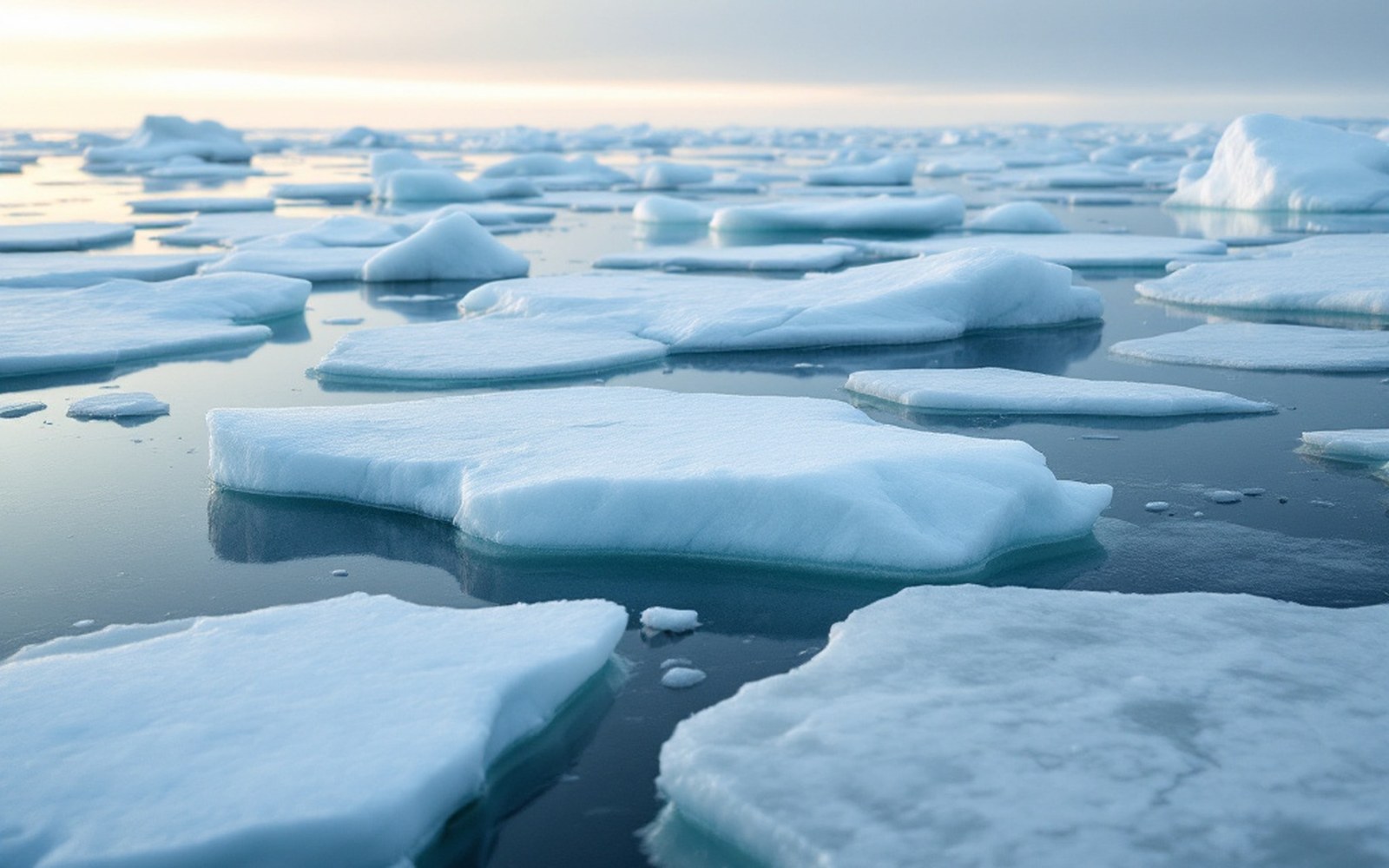
Two corridors that disappear at once
Travel in the western Arctic runs on two parallel systems that share almost no infrastructure. Summer means open water — boats on the river and Chukchi coast, barges moving fuel and freight to Kivalina and Kotzebue. Winter means frozen ground and rivers — snowmachines running routes that have no summer equivalent, the river ice itself serving as a road. The two systems do not overlap; what connects them is a gap, and the gap has a name at either end. Freeze-up is the autumn weeks when water becomes ice. Break-up is the spring weeks when ice becomes water again. During both, neither system works.
The mechanics are straightforward. A river freezes from the edges in, anchor ice forming on the riverbed while surface ice advances from the banks. For a period that can stretch from days to several weeks, the ice is neither absent nor safe — too thick to push a boat through, too thin to carry a snowmachine. A person watching the Wulik in late October is watching a river that is functionally closed. The same logic runs in reverse each May, when the ice softens and begins to move. Break-up on the Koyukuk and other interior rivers has been recorded for over a century; the pattern is consistent across Arctic Alaska — a transition that cannot be hurried and cannot be predicted to the day.
What the timing controls
The practical consequences stack up quickly. For a village like Kivalina, sitting on a barrier island with no road connection to anywhere, the freeze-up and break-up windows are periods of genuine logistical constraint. Emergency response is slower. Freight that missed the summer barge season cannot be recovered until the river and coast are properly frozen. A medical evacuation that would be a snowmachine run in January or a boat trip in July becomes a more complicated calculation in the transition weeks — weather permitting, and often it does not.
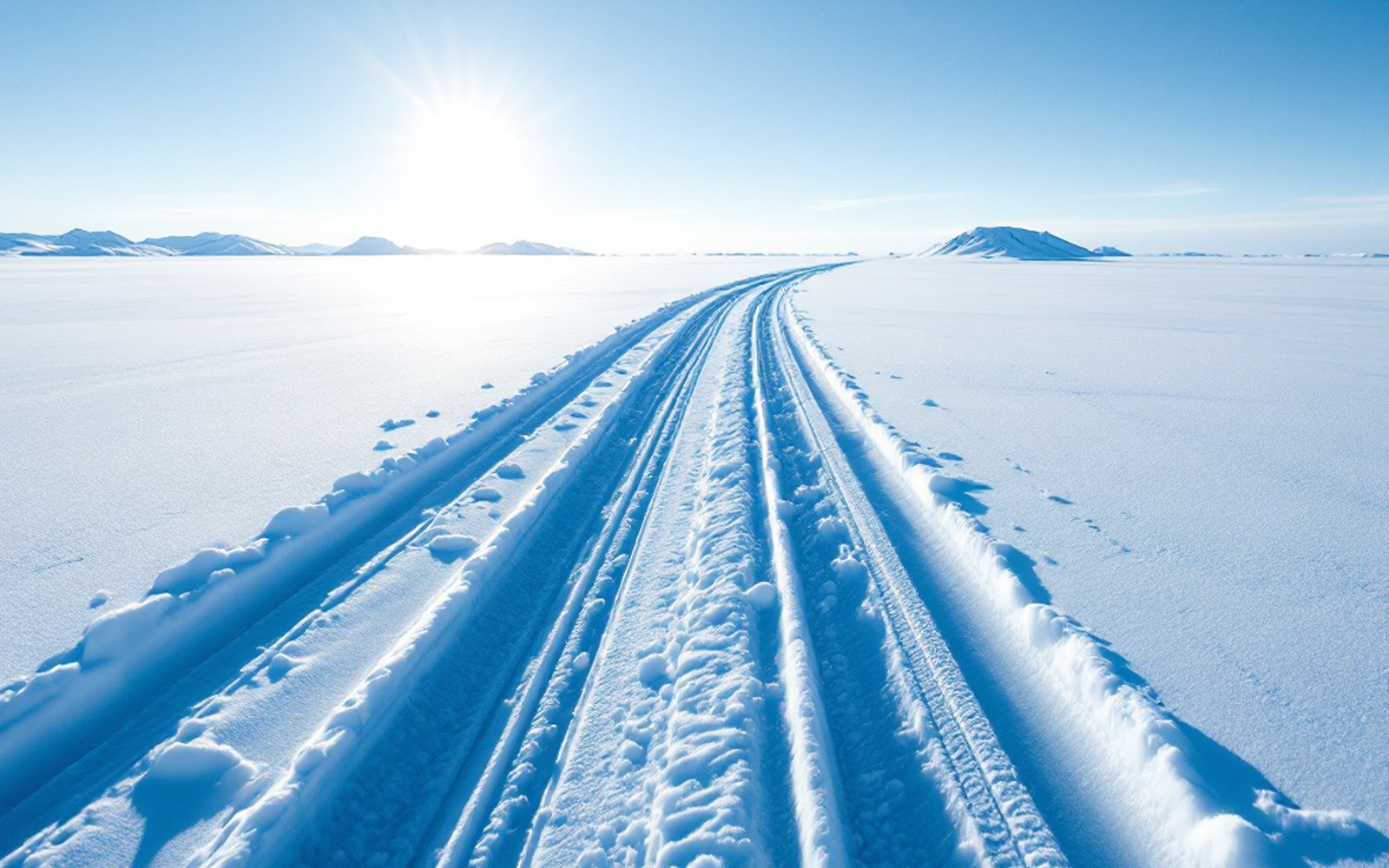
Frozen ground and rivers make travel easier in winter than in summer, which inverts the assumption most visitors arrive with. Winter is when the country opens up
The Red Dog Mine operates on a shipping calendar built around the Chukchi coast being open water from roughly July to October. But the mine's year-round road connection to the coast — the DeLong Mountain Transportation System — also depends on frozen ground for its most demanding haul sections. The shoulder seasons compress the operational window from both ends. A late freeze-up delays the point at which overland haul conditions are reliable; an early break-up shortens the back end.
Subsistence harvests — the char runs on the Wulik and the hunting that happens on frozen tundra — are timed around these transitions as well. The Dolly Varden that overwinter in the Wulik's river reaches become accessible through river ice in winter; their return to the sea at break-up marks the close of that access window. The calendar is not arbitrary. It is built on what the landscape permits.
A lengthening gap
What the record shows, across multiple datasets, is that break-up is arriving earlier in much of Arctic Alaska and freeze-up is arriving later. The National Snow and Ice Data Center documents the long-run trend in river ice duration across high-latitude systems. Even small shifts — a week earlier on one end, a week later on the other — accumulate into meaningfully wider gap periods each year. A transition that once lasted ten days can become three weeks without any single year looking dramatic.
The compounding effect is structural, not incidental. A community whose logistics depend on confident knowledge of when the ground freezes and when the river opens is running on a calendar that is becoming less predictable. The gap is not just inconvenient in the moment; it changes what can be planned and what cannot. Supply chains, emergency protocols, construction windows, the timing of a fuel delivery — all of them carry an assumption about when the transitions happen. That assumption is becoming harder to make with confidence.