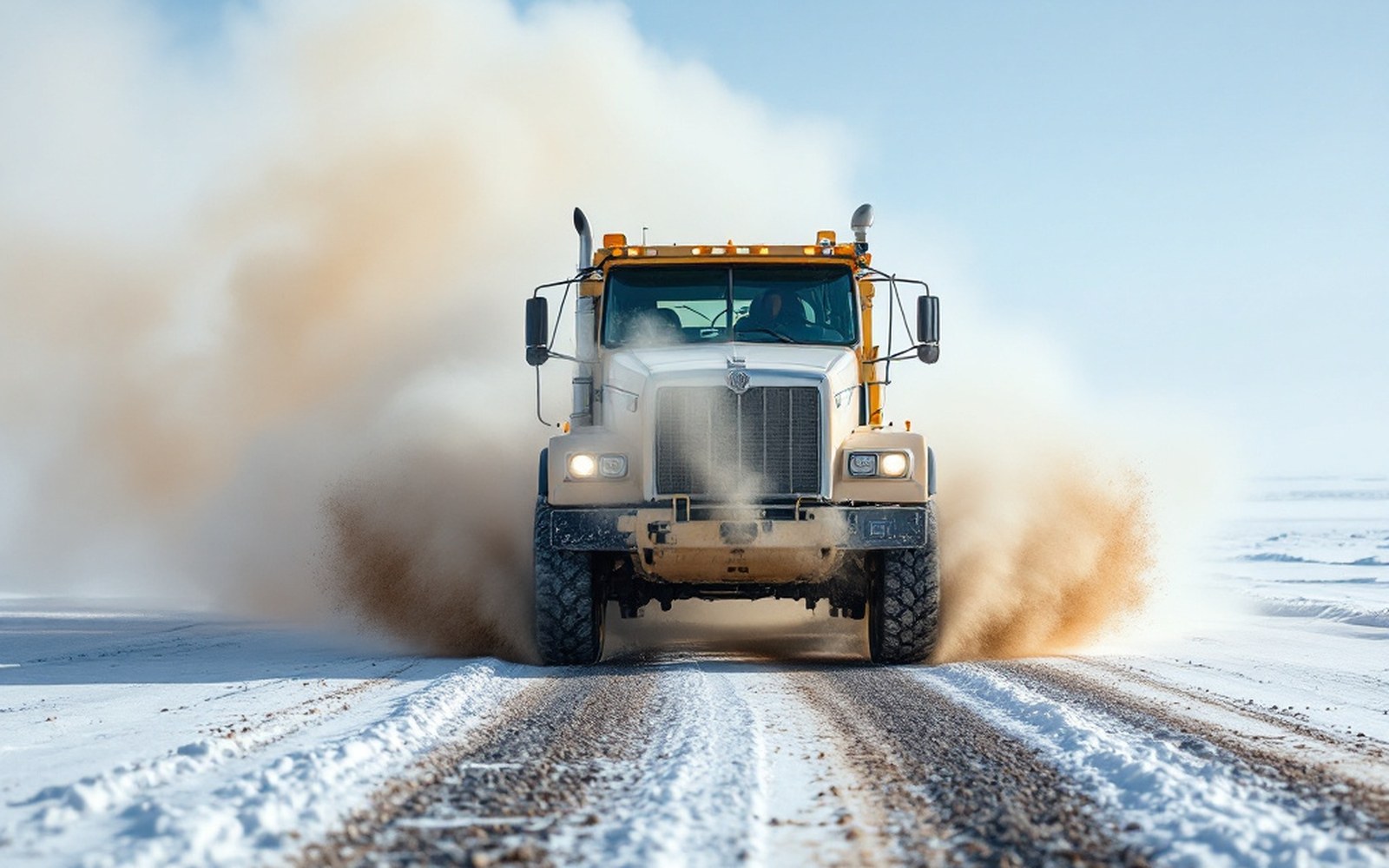
What leaves the road surface
The DeLong Mountain Transportation System road runs roughly 52 miles from Red Dog Mine to the Chukchi Sea coast, crossing tundra that was roadless before construction. The surface is gravel. Trucks haul zinc concentrate to the port, mainly to supply the summer shipping season, and run through winter as well, including for resupply. Every pass of a loaded vehicle raises a plume.
Road dust on the tundra is not primarily an aesthetic problem. The gravel that constitutes a haul-road surface is mechanically broken from rock formations that, at Red Dog, carry elevated concentrations of zinc, lead and cadmium. When the road is cut and crushed from local material, those metals travel with the dust. Studies examining soils, vegetation and snowpack along the DMTS corridor have detected elevated metal concentrations in samples taken at distances well beyond the physical road edge — the contamination extending laterally across the tundra in patterns consistent with prevailing wind directions.
Snow matters particularly. A winter snowpack accumulates dust across months, then releases it in a pulse during spring melt. On tundra with low-gradient drainage and soils that are underlain by permafrost and therefore do not percolate water readily, that pulse concentrates at the surface rather than dispersing into depth. The U.S. Environmental Protection Agency and the Alaska Department of Environmental Conservation have both been parties to the monitoring framework that tracks this, and the discharge and deposition standards the mine operates under reflect the documented transport pathway — not just what enters the water directly, but what settles on land and eventually reaches it.
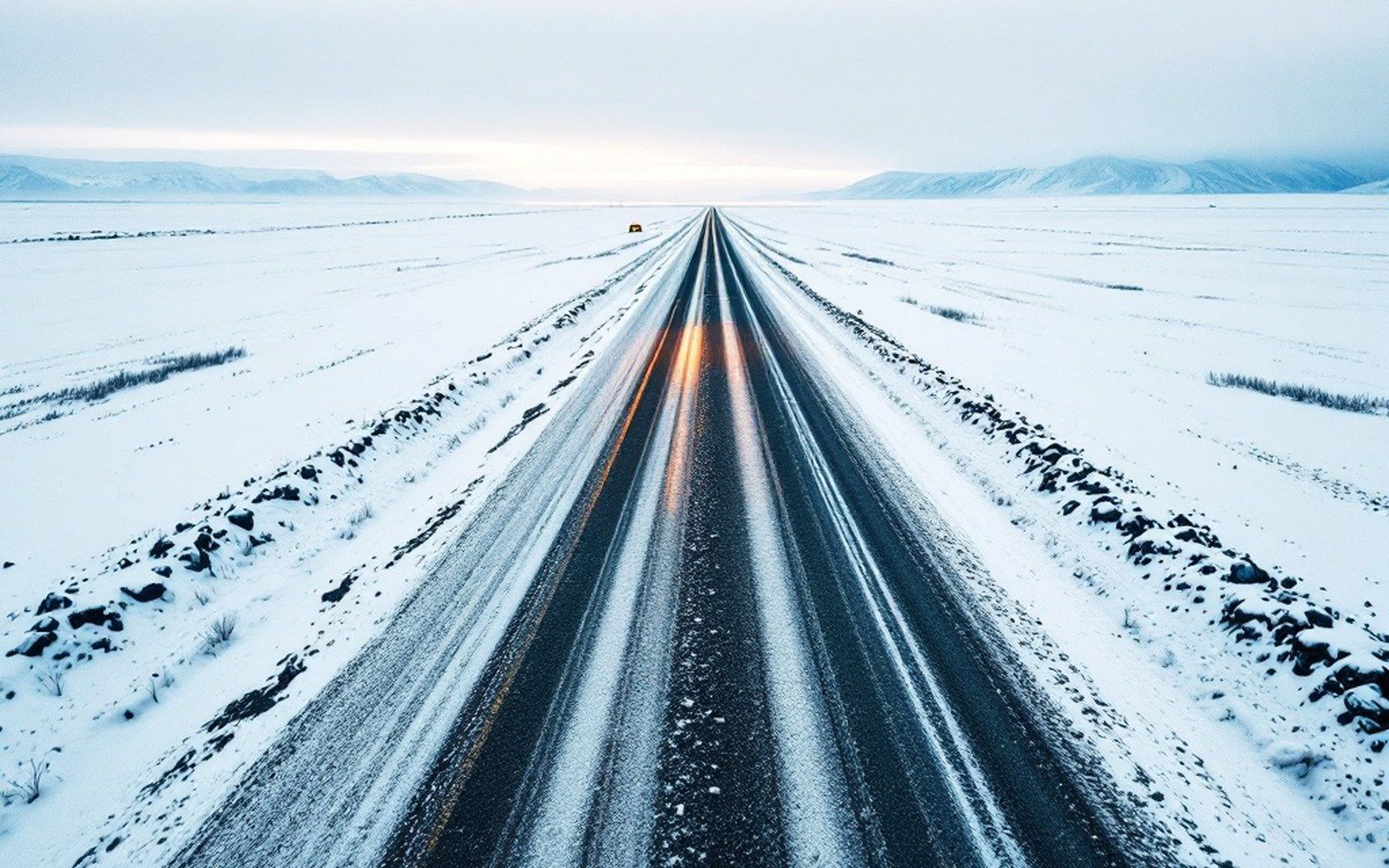
The DeLong Mountain Transportation System road runs from the mine to the coast, and it exists for concentrate haulage rather than for public access. A private road built for one customer
What monitoring has found, and when
Systematic dust monitoring along the DMTS corridor has been a regulatory requirement through the mine's operating history. Vegetation transects, snow sampling and soil analysis at fixed stations perpendicular to the road have documented the lateral extent of deposition. The Alaska Department of Fish and Game has conducted separate surveys of lichen and vegetation in the corridor; lichen is relevant because it lacks roots and absorbs metals directly from atmospheric deposition, making it both sensitive to dust loading and a dietary component for caribou that cross the road.
The NANA Regional Corporation holds the surface rights over most of the corridor, and the operating agreement between NANA and Teck Alaska Incorporated — the mine operator — includes provisions governing road maintenance and dust suppression as part of the environmental management structure. Dust suppression on gravel haul roads typically involves application of a hygroscopic brine, which keeps the surface damp and reduces the fraction of fine particles that become airborne. Application frequency, the season during which it operates, and gaps during freeze-up and break-up are all variables that affect annual deposition totals.
The EPA's oversight documentation for Red Dog includes the road corridor as part of the permitted facility's impact footprint. Monitoring data collected under that framework over multiple decades constitute an unusually long continuous record for a remote Arctic road — comparable in duration, if not in character, to the water-quality dataset maintained for the Wulik itself.
The corridor as a constructed landscape
A haul road changes what a landscape does with material. Before the DMTS road existed, the tundra between the De Long Mountains and the coast was a surface across which wind-blown particles moved according to natural erosion rates. After construction, the road added a concentrated linear source of mechanically comminuted rock — finer, more abundant and more metal-rich than the aeolian sediment that would otherwise cross that ground. The corridor is, in this sense, a new geological process operating on a decadal timescale.
That framing is not rhetorical. It is roughly how regulators approach the question: as a source-term problem requiring quantified emission rates, deposition modelling, and comparison against thresholds set to protect the tundra ecosystems that extend well beyond the gravel surface itself.